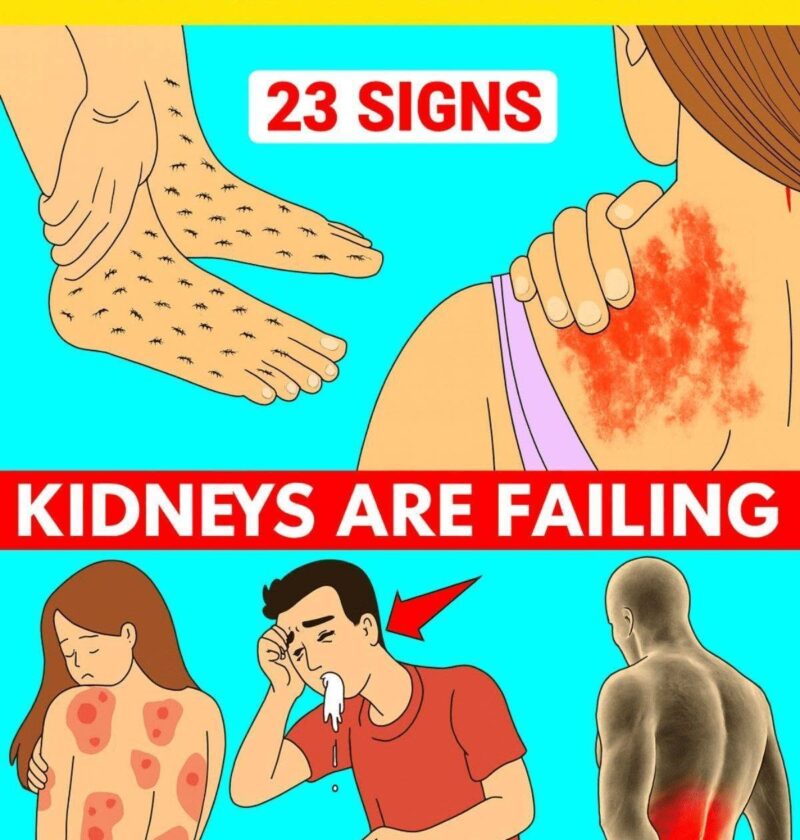
The headline “23 Strange Signs Your Kidneys Might Be in Trouble” is attention-grabbing, but the underlying idea is important: kidney disease can develop gradually and may cause few or no symptoms in its early stages. Many of the symptoms below can also be caused by other conditions, so they don’t necessarily mean you have kidney disease.
Possible signs of kidney problems
- Swelling of the feet, ankles, or legs.
- Puffiness around the eyes, especially in the morning.
- Changes in urination (more or less frequent than usual).
- Foamy or bubbly urine (which can indicate protein in the urine).
- Blood in the urine.
- Pain or burning during urination (often due to infection rather than kidney disease itself).
- Fatigue or unusual weakness.
- Difficulty concentrating.
- Loss of appetite.
- Nausea or vomiting.
- Persistent itching.
- Muscle cramps.
- Dry skin.
- High blood pressure that is difficult to control.
- Shortness of breath (especially if fluid builds up).
- Trouble sleeping.
- Metallic taste in the mouth.
- Bad breath that persists.
- Unexplained weight loss.
- Pain in the side or lower back (more common with kidney stones or infection than chronic kidney disease).
- Frequent nighttime urination.
- Pale skin due to anemia.
- Persistent swelling of the hands or face.
Risk factors for kidney disease
You’re at higher risk if you have:
- Diabetes.
- High blood pressure.
- Heart disease.
- A family history of kidney disease.
- Older age.
- A history of kidney stones or recurrent urinary tract infections.
When to seek medical attention
Contact a healthcare professional if you notice:
- Blood in your urine.
- Swelling that doesn’t improve.
- Persistent changes in urination.
- High blood pressure that’s difficult to control.
- Ongoing fatigue, nausea, or loss of appetite without another explanation.
Seek urgent medical care if you have severe flank pain with fever, are unable to urinate, or have blood in the urine with severe pain.
How kidney disease is diagnosed
Doctors typically use:
- Blood tests to measure kidney function (such as creatinine and estimated glomerular filtration rate, or eGFR).
- Urine tests to check for protein or blood.
- Blood pressure measurement.
- Imaging tests if needed.
Bottom line
Many of these symptoms have causes other than kidney disease, and early kidney disease often has no symptoms at all. If you have risk factors—especially diabetes or high blood pressure—regular checkups and kidney function tests are the best way to detect problems early.