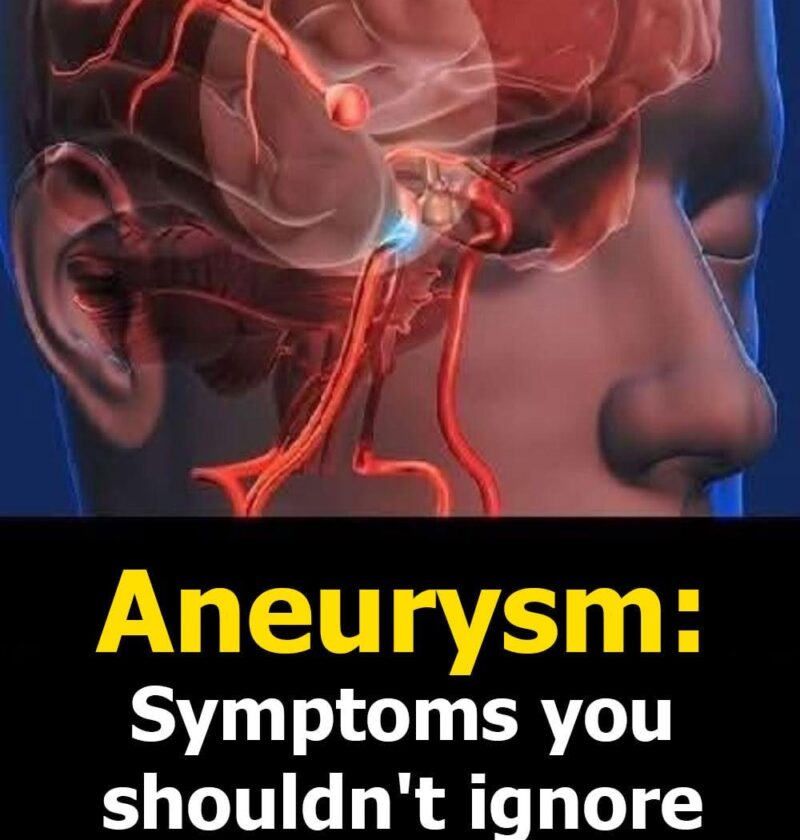
That “See more” headline is another classic fear-based teaser. It’s referring to an Aneurysm, but the phrasing is often misleading because most aneurysms don’t show obvious warning signs before they become dangerous.
What people actually shouldn’t ignore
If an aneurysm becomes urgent or ruptures, symptoms can include:
- Sudden, extremely severe headache (“thunderclap” headache)
- Loss of consciousness or fainting
- Stiff neck
- Nausea or vomiting
- Vision changes or double vision
- Weakness or numbness on one side of the body
- Seizure
The important reality
- Most aneurysms are silent for years
- Many “early signs” listed in social media posts are non-specific (they can also be migraines, stress, or blood pressure issues)
- A rupture is rare but life-threatening and requires emergency care
When to treat it as an emergency
If someone suddenly develops a worst-ever headache with neurological symptoms, it’s not something to “wait and see”—it needs immediate medical attention.
If you want, I can break down which symptoms are actually early warning signs versus which ones are just internet exaggerations.