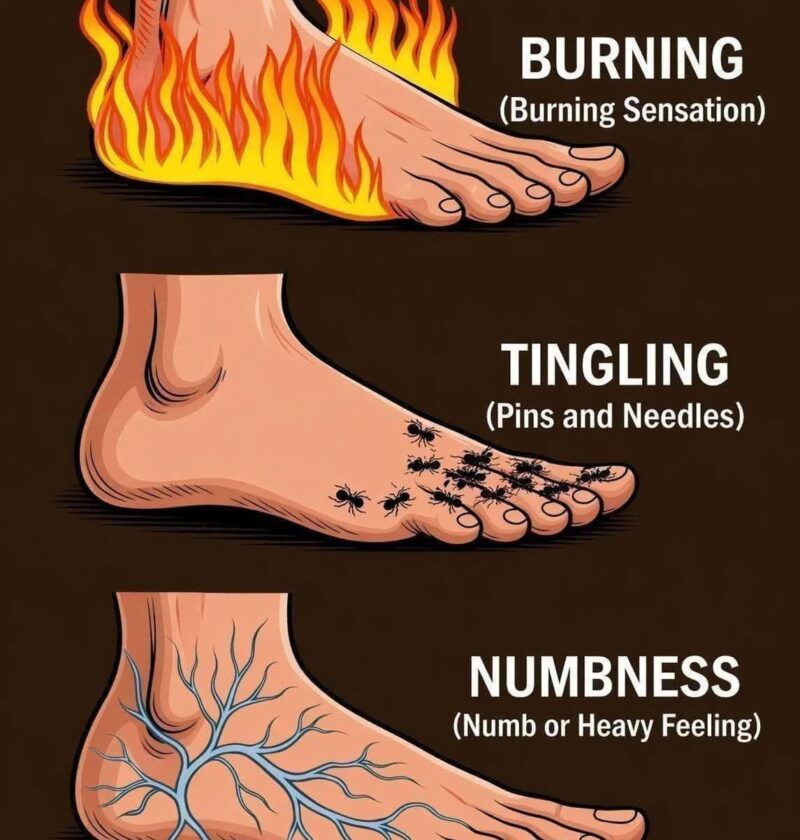
1. Numbness or tingling
A “pins and needles” feeling, burning, or loss of sensation may be linked to nerve problems, including those associated with diabetes.
2. Persistent foot pain
Ongoing pain that does not improve with rest may point to problems such as arthritis, nerve irritation, or injury.
3. Swelling in the feet or ankles
Swelling can occur from standing for long periods, but persistent swelling may be related to circulation, heart, kidney, or vein problems.
4. Cold feet
Feet that are unusually cold, especially with color changes or pain, may be a sign of reduced blood flow.
5. Changes in skin color
Pale, bluish, or unusually red skin can sometimes indicate circulation problems or inflammation.
6. Slow-healing cuts or sores
Wounds that take a long time to heal can be a warning sign, especially in people with diabetes or circulation issues.
7. Burning sensations
Burning pain in the feet, particularly at night, may be associated with nerve irritation or neuropathy.
8. Changes in toenails or skin
Thickened nails, frequent fungal infections, or dry, cracked skin may indicate local problems or changes in health.
9. Loss of balance or weakness
Difficulty walking steadily or weakness in the feet can be related to nerve, muscle, or joint problems.
Seek medical advice promptly if you have a new loss of feeling, a foot wound that is not healing, sudden swelling, severe pain, or a foot that becomes cold and discolored.
Many foot symptoms have simple explanations, but persistent or worsening changes are worth checking because the feet can sometimes provide early clues about broader health issues.