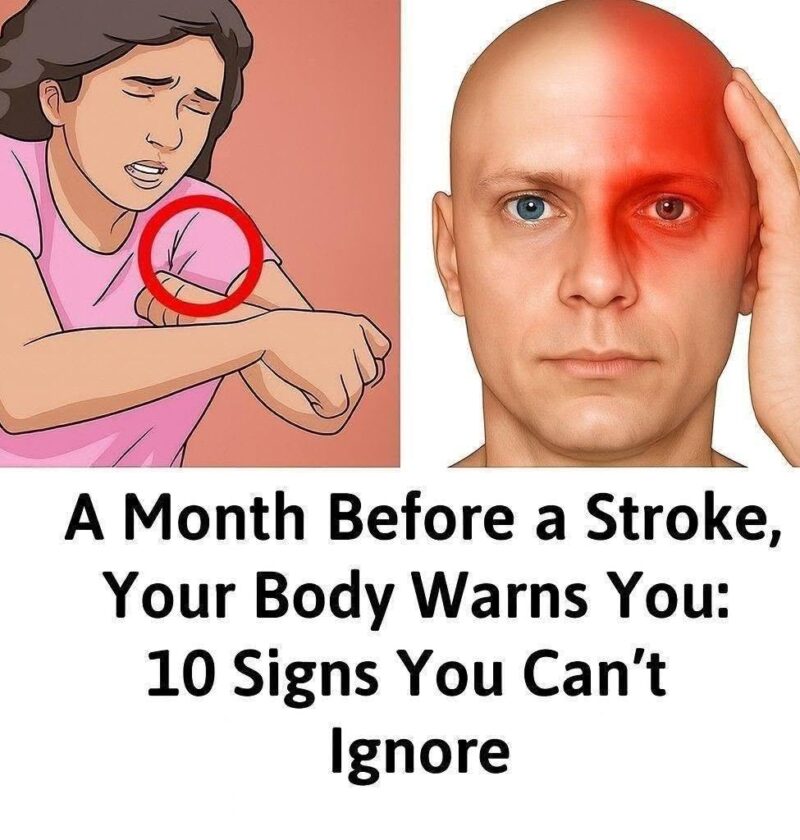
The most important true warning sign is a transient ischemic attack (TIA), sometimes called a “mini-stroke.”
⚠️ Possible warning signs that should never be ignored
A TIA or stroke can cause sudden:
- Weakness or numbness of the face, arm, or leg (especially on one side)
- Trouble speaking or understanding speech
- Vision loss or blurred vision in one or both eyes
- Dizziness or loss of balance
- Difficulty walking
- Severe headache with no obvious cause
These symptoms may last only a few minutes and then disappear, but they can signal a high risk of a future stroke.
🧠 Remember FAST
A simple way to recognize stroke symptoms is:
- Face drooping
- Arm weakness
- Speech difficulty
- Time to call emergency services
The sooner treatment begins, the better the chances of reducing disability.
🚩 Be skeptical of these “warning signs”
Many viral articles list things like:
- Fatigue
- Poor sleep
- Leg cramps
- General headaches
- Mood changes
While these symptoms can have many causes, they are not reliable predictors of a stroke a month later.
Who is at higher risk?
Risk factors include:
- High Blood Pressure (the biggest modifiable risk factor)
- Type 2 Diabetes
- Smoking
- High cholesterol
- Atrial Fibrillation
- Obesity
- Physical inactivity
Bottom line
There is no medically accepted list of “10 signs that guarantee a stroke is coming in a month.” What matters most is recognizing sudden neurological symptoms, even if they disappear quickly. A possible TIA is a medical emergency because it can be a warning that a larger stroke may follow.
If you’d like, I can also explain the differences between a TIA, ischemic stroke, and hemorrhagic stroke in simple terms.