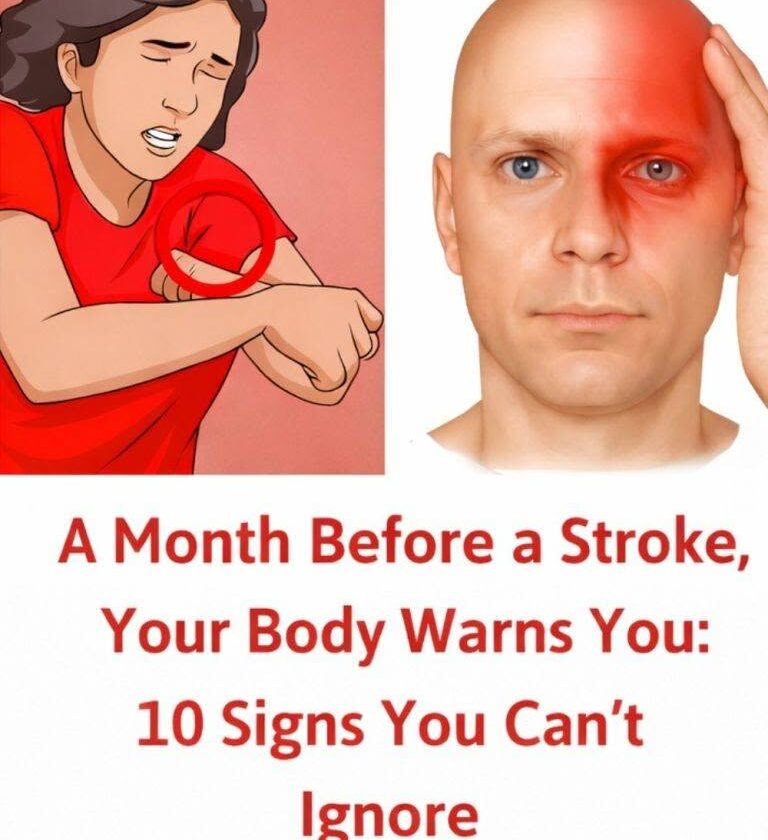
The headline “A month before a stroke, your body warns you” is misleading. There is no reliable set of 10 symptoms that predict a stroke exactly one month in advance.
What doctors do recognize is a transient ischemic attack (TIA)—sometimes called a “warning stroke.” A TIA can produce the same symptoms as a stroke, but they disappear. It is an emergency because it can signal a stroke risk in the near future.
W
www.stroke.org
+1
🚨 Symptoms you should never ignore
Watch for sudden:
Numbness or weakness of the face, arm, or leg—especially on one side
Facial drooping
Trouble speaking or understanding speech
Sudden vision loss or major vision changes
Sudden dizziness or loss of balance
Difficulty walking or coordinating movements
A severe headache with no obvious cause
Confusion or sudden difficulty thinking clearly
Double vision
Sudden difficulty swallowing or other new neurological symptoms
These symptoms can have other causes, but you cannot reliably distinguish a TIA from a stroke at home.
W
www.stroke.org
+1
Remember B.E. F.A.S.T.
B — Balance loss
E — Eye/vision changes
F — Face drooping
A — Arm weakness
S — Speech difficulty
T — Time to call emergency services
Even if the symptoms completely disappear, don’t ignore them. A suspected TIA requires urgent medical assessment.
W
www.stroke.org
+1
Bottom line: Don’t wait for a “one month warning.” A sudden neurological symptom today is the warning that matters. Fast evaluation can identify the cause and potentially prevent a major stroke.
W
www.stroke.org
W
Sources