Understanding the Link Between High Blood Pressure Drugs and Heart Health
Millions of people around the world rely on blood pressure medications every day to help control hypertension and reduce the risk of heart attack, stroke, kidney disease, and other serious health complications. These medications have played a vital role in improving public health and extending life expectancy. However, from time to time, new research raises important questions about the safety profile of commonly prescribed treatments.
One recent study attracted significant attention after suggesting that a widely used blood pressure medication may be associated with an increased risk of sudden cardiac arrest when taken at higher doses. The findings generated headlines and social media discussions, leading many patients to wonder whether their medication could pose an unexpected danger.
Before drawing conclusions, it is important to understand what the research actually found, which medication was involved, and what healthcare professionals recommend for patients currently taking blood pressure medicine.
Why High Blood Pressure Treatment Matters
High blood pressure, also known as hypertension, is one of the most common chronic health conditions worldwide. Often called the “silent killer,” hypertension frequently develops without noticeable symptoms while gradually damaging blood vessels and vital organs.
When blood pressure remains elevated over time, it increases the risk of:
- Heart attack
- Stroke
- Heart failure
- Kidney disease
- Vision problems
- Peripheral artery disease
- Cognitive decline
Because of these risks, healthcare providers commonly prescribe medications to help maintain healthy blood pressure levels and protect long-term cardiovascular health.
Common Types of Blood Pressure Medications
Doctors use several classes of medications to manage hypertension. These include:
- ACE inhibitors
- Angiotensin receptor blockers (ARBs)
- Beta blockers
- Diuretics
- Calcium channel blockers
- Vasodilators
Each medication works differently, and treatment plans are tailored according to a patient’s medical history, age, overall health, and cardiovascular risk profile.
Among these options, calcium channel blockers have become especially popular due to their effectiveness and generally favorable safety record.
The Medication Highlighted in the Study
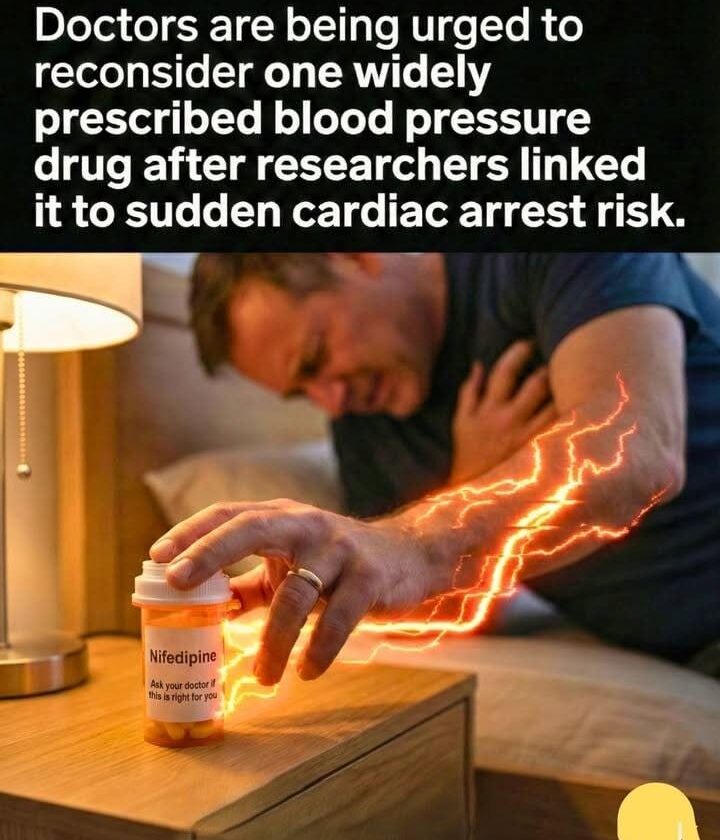
The medication receiving attention in recent research is nifedipine, a calcium channel blocker frequently prescribed for high blood pressure and certain heart-related conditions.
Nifedipine works by relaxing blood vessels, allowing blood to flow more easily and reducing the workload on the heart. For many patients, it has been an effective and reliable treatment option for years.
Researchers examined whether certain dosages of nifedipine could be associated with an increased risk of sudden cardiac arrest compared with other medications used for similar purposes.
What the Research Found
According to the study, higher doses of nifedipine appeared to be associated with a greater risk of out-of-hospital sudden cardiac arrest compared with lower doses and some alternative medications.
The researchers focused particularly on individuals taking higher daily doses, where the observed association was strongest.
Importantly, the study did not prove that nifedipine directly causes cardiac arrest. Instead, it identified a statistical association that warrants further investigation.
This distinction is critical because observational studies can identify patterns but cannot always establish a direct cause-and-effect relationship.
Understanding Sudden Cardiac Arrest
Sudden cardiac arrest occurs when the heart unexpectedly stops beating effectively due to an electrical malfunction.
Unlike a heart attack, which is usually caused by blocked blood flow to the heart muscle, cardiac arrest primarily involves disruptions in the heart’s electrical system.
Symptoms may include:
- Sudden collapse
- Loss of consciousness
- No detectable pulse
- Absence of normal breathing
Without immediate medical intervention, sudden cardiac arrest can be fatal within minutes.
Why Higher Doses May Matter
Researchers believe that medication dosage may play an important role in cardiovascular safety.
Some medications can influence the electrical activity of the heart, especially when administered at higher levels. Scientists continue to study how these effects may contribute to abnormal heart rhythms in certain individuals.
The findings suggest that dosage considerations may be just as important as medication selection when evaluating cardiovascular treatment plans.
Expert Interpretation of the Findings
Medical experts caution against overreacting to a single study.
Several important factors should be considered:
Association Does Not Equal Causation
Observational studies can identify potential risks but cannot definitively prove that a medication directly caused a medical event.
Individual Risk Factors Matter
Patients differ significantly in terms of age, genetics, existing heart disease, lifestyle habits, and overall health status.
Benefits Often Outweigh Risks
For many individuals, controlling high blood pressure substantially reduces the likelihood of heart attack, stroke, and cardiovascular death.
Additional Research Is Needed
Scientists generally agree that more studies are necessary before treatment guidelines are changed.
Should Patients Stop Taking Their Medication?
One of the most important messages from healthcare professionals is simple: patients should never stop prescribed blood pressure medication without consulting their physician.
Abruptly discontinuing treatment may cause:
- Dangerous blood pressure spikes
- Increased risk of stroke
- Heart complications
- Worsening cardiovascular disease
Anyone concerned about medication safety should schedule a discussion with their healthcare provider rather than making changes independently.
Questions Patients May Want to Ask Their Doctor
Individuals taking nifedipine or other blood pressure medications may wish to discuss:
- Their current dosage
- Available alternative treatments
- Personal cardiovascular risk factors
- Monitoring strategies
- Potential side effects
- Recent research findings
Open communication can help ensure treatment remains both safe and effective.
Additional Ways to Support Heart Health
Medication is only one component of cardiovascular wellness. Lifestyle habits also play a major role in blood pressure management.
Maintain a Healthy Diet
A heart-friendly eating plan emphasizes:
- Fruits
- Vegetables
- Whole grains
- Lean proteins
- Healthy fats
Stay Physically Active
Regular exercise helps improve circulation, maintain healthy weight, and support blood pressure control.
Limit Excess Sodium
Reducing salt intake can help lower blood pressure in many individuals.
Avoid Tobacco Products
Smoking significantly increases cardiovascular risk and damages blood vessels.
Manage Stress
Chronic stress may contribute to elevated blood pressure and other health concerns.
Monitor Blood Pressure Regularly
Routine monitoring allows patients and healthcare providers to track treatment effectiveness and identify changes early.
The Future of Medication Safety Research
Advances in medical research continue to improve understanding of how medications affect different patient populations.
Large-scale studies, electronic health records, and sophisticated data analysis techniques enable researchers to detect potential safety concerns more effectively than ever before.
As new evidence emerges, treatment recommendations may evolve to better balance effectiveness and safety.
Final Thoughts
The recent study examining high-dose nifedipine and sudden cardiac arrest risk highlights the importance of ongoing medication safety research. While the findings deserve attention, they should not cause panic among patients currently using blood pressure medications.
High blood pressure remains a serious medical condition that requires proper management. Patients should work closely with qualified healthcare professionals to evaluate treatment options, discuss concerns, and make informed decisions based on their individual health needs.
The best approach is one that combines evidence-based medical care, regular monitoring, healthy lifestyle choices, and open communication with healthcare providers. By staying informed and proactive, patients can continue protecting their cardiovascular health while benefiting from advances in modern