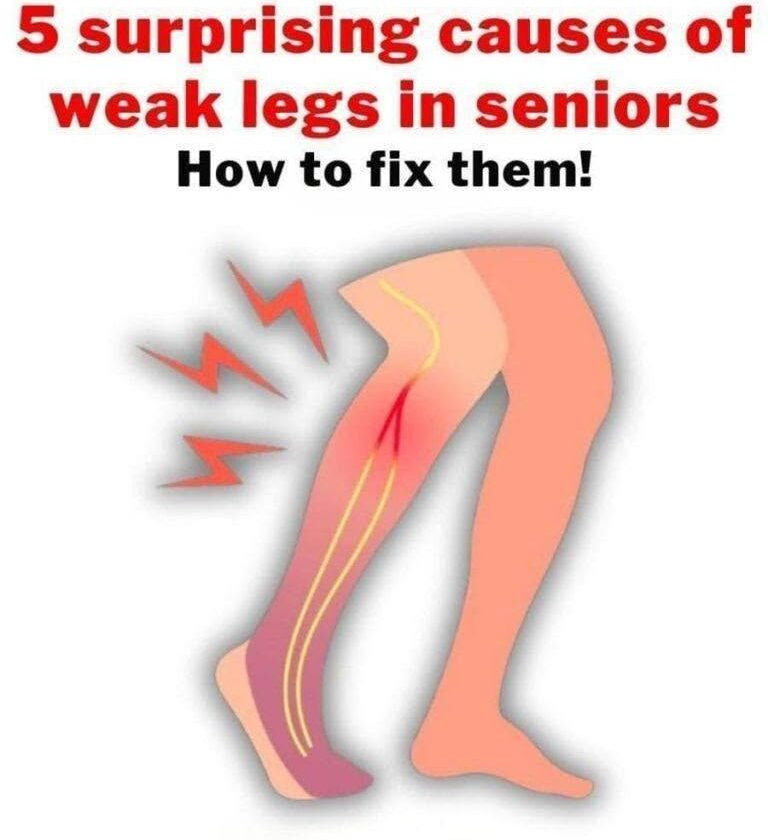
Weak legs in older adults are common, but the causes aren’t always obvious. Some are reversible if identified early.
Here are 5 surprising causes of weak legs in seniors—and how to address them:
1. Muscle loss from inactivity
Sarcopenia is one of the most common but often overlooked causes.
Why it happens:
After age 40–50, muscle mass naturally declines faster without regular strength use.
How to improve it:
- Gentle resistance training (bands, light weights, chair exercises)
- Walking daily
- Adequate protein intake
2. Hidden vitamin deficiencies
Low levels of vitamin D, B12, or magnesium can lead to fatigue, weakness, and balance issues.
How to fix it:
- Blood test to identify deficiencies
- Supplements under medical guidance
- Diet improvement (fish, eggs, dairy, leafy greens)
3. Nerve damage or irritation
Peripheral Neuropathy can cause heaviness, tingling, or weakness in the legs.
Common causes include:
- Diabetes
- Alcohol use
- Vitamin deficiencies
How to manage:
- Treat underlying cause (especially blood sugar control)
- Physical therapy
- Balance training exercises
4. Circulation problems
Poor blood flow to the legs can make walking difficult and cause weakness or cramping.
A key condition is:
Peripheral Artery Disease
How to improve it:
- Regular walking programs (even short sessions)
- Managing cholesterol, blood pressure, and diabetes
- Avoid smoking
5. Medication side effects
Some common prescriptions may contribute to fatigue or weakness:
- Blood pressure medications
- Sedatives
- Some cholesterol-lowering drugs
What helps:
- Medication review with a doctor or pharmacist
- Dose adjustment or alternatives if needed
⚠️ When to get checked urgently
Seek medical advice if leg weakness:
- Appears suddenly
- Causes falls
- Comes with numbness or pain
- Is getting worse quickly