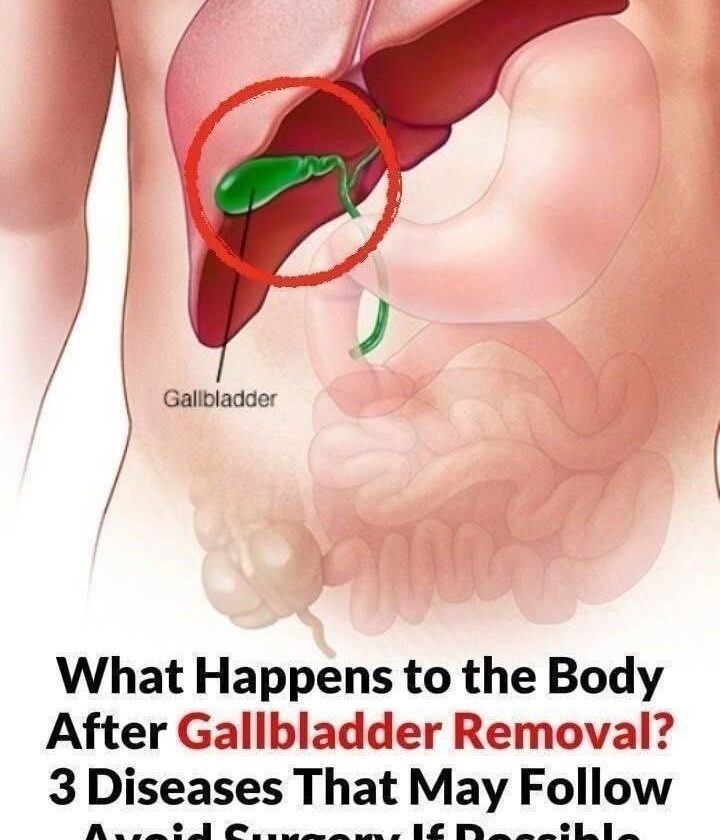
After Gallbladder Removal: 3 Possible Conditions to Know About — and When Surgery Is Recommended
Gallbladder removal surgery (cholecystectomy) is one of the most common surgical procedures and is generally considered safe and effective for people who have problems such as painful gallstones or repeated gallbladder inflammation. However, like any surgery, it can have possible side effects and long-term changes that some people experience.
It is important to understand that avoiding necessary surgery can also be risky. Untreated gallbladder problems may lead to serious complications, so the decision should be made with a qualified healthcare professional based on your symptoms and medical condition.
1. Changes in Digestion
The gallbladder stores bile, a fluid made by the liver that helps digest fats. After gallbladder removal, bile flows directly from the liver into the small intestine instead of being stored and released during meals.
Some people may experience:
- Loose stools or diarrhea
- Bloating
- Gas
- Difficulty tolerating very fatty meals
These symptoms often improve over time. Eating smaller meals and reducing very high-fat foods may help the digestive system adjust.
2. Bile Acid Diarrhea
A small number of people develop ongoing diarrhea after gallbladder removal due to excess bile acids reaching the colon. This condition is called bile acid diarrhea.
Possible signs include:
- Frequent watery stools
- Urgency to use the bathroom
- Symptoms that continue for months after surgery
A healthcare professional can evaluate the cause and recommend treatments if needed.
3. Post-Cholecystectomy Symptoms
Some people continue to have abdominal discomfort or digestive symptoms after surgery. This is sometimes referred to as post-cholecystectomy syndrome.
Possible symptoms may include:
- Abdominal pain
- Nausea
- Indigestion
- Bloating
These symptoms can have different causes, so medical evaluation is important rather than assuming they are caused only by the surgery.
Should You Avoid Gallbladder Surgery?
Gallbladder removal is not recommended for everyone with gallstones. Some people have gallstones without symptoms and may not need surgery. However, surgery is often advised when there are problems such as:
- Repeated painful gallstone attacks
- Gallbladder infection (cholecystitis)
- Blocked bile ducts
- Pancreatitis caused by gallstones
- Other complications
Delaying needed treatment can increase the risk of serious illness.
Supporting Digestive Health After Surgery
Helpful habits may include:
- Eating balanced meals
- Increasing fiber gradually
- Limiting very greasy foods if they trigger symptoms
- Maintaining a healthy weight
- Following medical advice
Final Thoughts
Gallbladder removal can cause digestive changes for some people, but it is also a highly effective treatment when gallbladder disease is causing significant problems. The right choice depends on the individual situation—not on a general rule to avoid surgery.
If you have gallstones or are considering gallbladder surgery, discuss the benefits, risks, and alternatives with your healthcare provider.