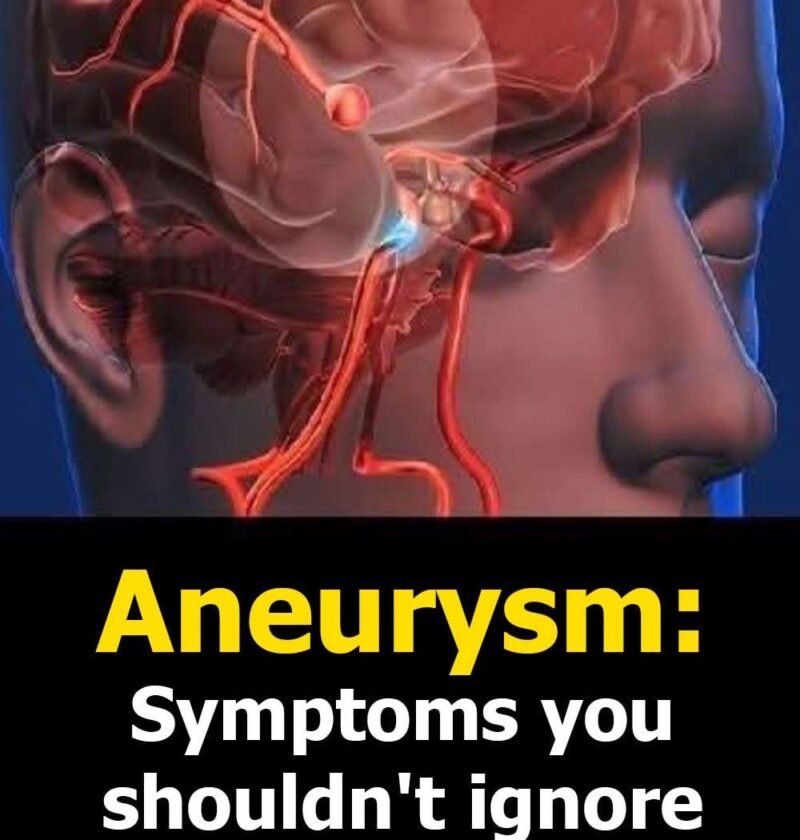
That phrase is another common clickbait medical teaser. Here’s the real, medically accurate version of what you should know about aneurysms and their warning signs.
An Aneurysm is a weakened area in a blood vessel that can bulge and, in serious cases, rupture. The danger depends heavily on where it occurs (brain, aorta, etc.).
Signs you shouldn’t ignore (depending on type)
1) Brain aneurysm (before rupture)
Often there are no symptoms, but possible warning signs include:
- Sudden, severe headache (“worst headache of your life”)
- Blurred or double vision
- Pain above or behind the eye
- Drooping eyelid
- Weakness or numbness in one side of the face
2) Ruptured brain aneurysm (medical emergency)
- Sudden explosive headache
- Nausea or vomiting
- Stiff neck
- Loss of consciousness
- Seizure
3) Aortic aneurysm (chest or abdomen)
Before rupture, it may cause:
- Deep, constant pain in chest, back, or abdomen
- Pulsating feeling in the abdomen (sometimes)
If rupture happens:
- Sudden severe tearing pain (chest or back)
- Dizziness or fainting
- Rapid drop in blood pressure
- Shock
Important reality check
- Many aneurysms cause no symptoms at all until they become large or rupture.
- Risk increases with high blood pressure, smoking, age, and family history.
- Most unruptured aneurysms are found incidentally on scans.
When to act immediately
Seek emergency care if there is:
- Sudden “worst headache”
- Sudden severe chest or back pain
- Fainting or collapse
- Sudden neurological symptoms (speech, vision, weakness)
If you want, I can also explain what causes aneurysms and how they’re prevented, or help you understand whether a specific symptom is actually concerning or just anxiety-related.