🧠 Aneurysm: Signs You Shouldn’t Ignore
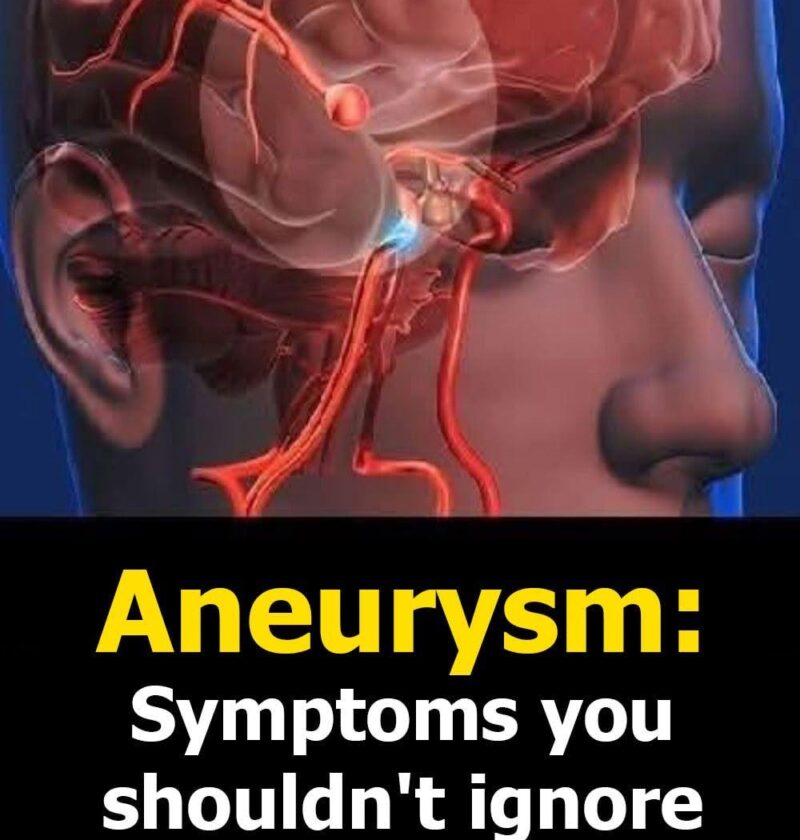
An aneurysm is a weakened area in a blood-vessel wall that bulges outward. Many aneurysms cause no symptoms and are discovered incidentally. The danger is that an aneurysm can sometimes rupture and cause life-threatening internal bleeding. (nhs.uk)
🚨 Warning signs that need urgent attention
Depending on where the aneurysm occurs, symptoms can include:
- Sudden, extremely severe headache — especially a “thunderclap” headache that reaches maximum intensity very quickly.
- Sudden weakness or numbness, particularly on one side.
- Facial drooping or difficulty speaking.
- Sudden vision changes, including blurred or double vision.
- Neck stiffness, nausea, or vomiting.
- Seizure, confusion, fainting, or loss of consciousness. (nhs.uk)
- Sudden severe chest, back, or abdominal pain can also occur with a ruptured aneurysm elsewhere in the body. (nhs.uk)
⚠️ Don’t wait for symptoms to pass
A sudden severe headache, especially when accompanied by vomiting, stiff neck, weakness, confusion, seizure, or loss of consciousness, is a medical emergency. Call your local emergency service immediately and don’t drive yourself to the hospital. (nhs.uk)
Risk factors for brain aneurysms include smoking, high blood pressure, and a close family history of brain aneurysm; certain genetic conditions can also increase risk. (nhs.uk)
Important: Most headaches and episodes of dizziness are not caused by aneurysms. Symptoms alone cannot diagnose one; medical evaluation and appropriate imaging are needed.