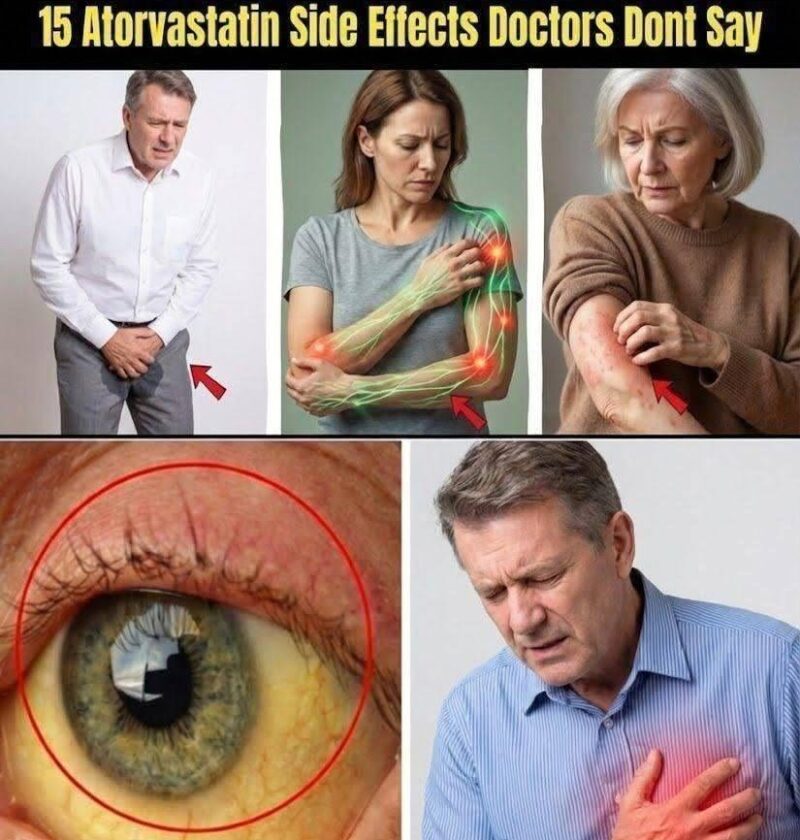
Atorvastatin: 15 side effects and risks worth knowing
The phrase “hidden dangers your doctor may not tell you” is misleading. Atorvastatin is well studied and is prescribed to lower LDL cholesterol and reduce the risk of heart attack and stroke. Most people tolerate it well.
N
nhs.uk
+1
Potential effects and risks include:
Muscle aches or soreness
Muscle weakness
Muscle cramps
Headache
Dizziness
Nausea or stomach upset
Diarrhea or constipation
Joint pain
Sleep problems
Increased blood glucose/HbA1c in some people
Liver-enzyme elevations
Liver inflammation — uncommon but potentially serious
Severe muscle injury (rhabdomyolysis) — very rare but can damage the kidneys
Rare immune-mediated necrotizing myopathy — muscle weakness that can persist even after stopping the statin
Memory loss or confusion have been reported, but these reports are uncommon and the relationship is not always clear.
F
FDA Access Data
+1
🚨 Symptoms you shouldn’t ignore
Contact a healthcare professional promptly if you develop unexplained severe muscle pain or weakness, especially with dark/red-brown urine, or signs of liver injury such as yellow skin/eyes, unusually dark urine, or severe abdominal pain.
N
nhs.uk
+1
Atorvastatin can also interact with medicines including clarithromycin, certain antifungals, some HIV/HCV medicines, cyclosporine, colchicine, and certain heart medicines. Large amounts of grapefruit juice can increase atorvastatin exposure as well.
N
nhs.uk
+1
Don’t stop atorvastatin simply because you’ve read about side effects. Stopping treatment can allow cholesterol to rise and remove some of its cardiovascular protection. If you’re experiencing symptoms, a doctor can assess whether atorvastatin is responsible and whether the dose or medication should be changed.
N
nhs.uk
+1
If you tell me your atorvastatin dose (10, 20, 40, or 80 mg) and any symptoms you’re experiencing, I can explain which ones are most concerning.
N
F
Sources