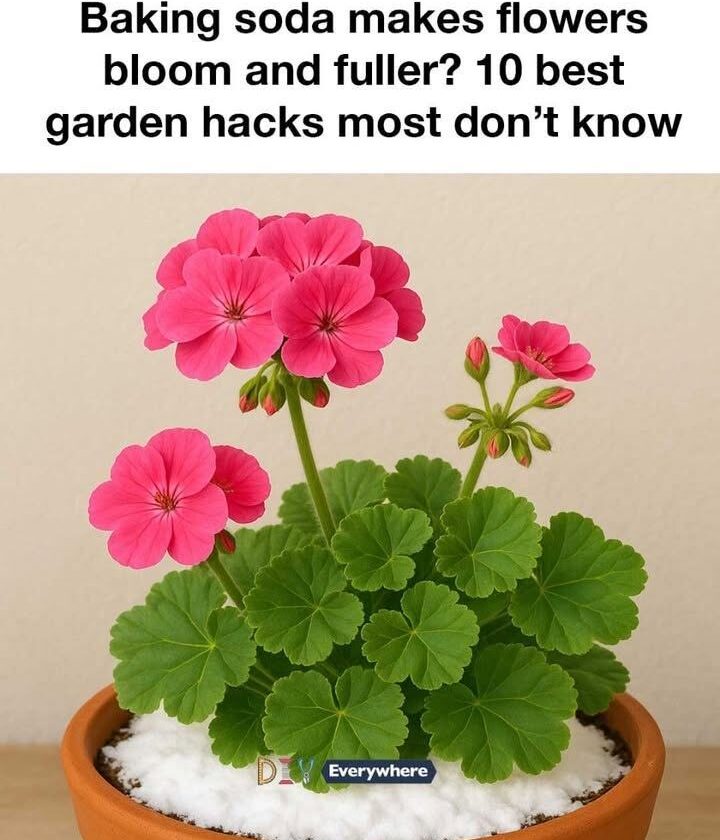
🌸 Baking Soda Makes Flowers Bloom Bigger and Fuller? Here’s What’s Actually True
You may have seen the viral claim that baking soda makes flowers bloom more abundantly. The truth is more nuanced: there is no good evidence that simply adding baking soda to healthy soil reliably produces bigger or more numerous flowers. In fact, too much sodium bicarbonate can damage plants and make soil excessively alkaline. (Good Housekeeping)
🌿 10 garden hacks that are actually useful
1. Use baking soda for powdery mildew
A carefully diluted bicarbonate spray can help suppress powdery mildew on some plants. Potassium bicarbonate is generally preferred for this purpose, and any spray should first be tested on a small area because foliage can be damaged. (Ask Extension)
2. Don’t use baking soda as routine fertilizer
Baking soda doesn’t provide the nutrients plants need for healthy flowering. Don’t sprinkle it around plants hoping for more blooms.
3. Test your soil before changing its pH
If soil is too acidic, the appropriate amendment should be chosen based on a soil test rather than guessing with baking soda. Excessive alkalinity can interfere with nutrient availability. (The Spruce)
4. Deadhead spent flowers ✂️
Removing faded blooms can encourage many ornamental plants to produce additional flowers.
5. Give flowering plants enough sunlight ☀️
Many flowering plants need around 6 or more hours of sunlight, although requirements vary by species. Good light is far more reliable for flowering than baking soda. (The Spruce)
6. Avoid excessive nitrogen
Too much nitrogen can encourage lush leaves at the expense of flowers in some ornamentals. Fertilize according to the plant’s needs rather than simply adding more.
7. Improve air circulation
Don’t overcrowd plants. Better airflow helps reduce fungal problems such as powdery mildew. (Ask Extension)
8. Water the soil rather than constantly wetting foliage
Keeping leaves wet for long periods can encourage some diseases. Watering appropriately at the root zone can help.
9. Remove diseased leaves promptly 🍃
When fungal disease appears, removing badly affected foliage and improving airflow can reduce its spread. (Ask Extension)
10. Use compost to improve soil quality
Well-made compost can add organic matter and improve soil structure. It’s a much more dependable long-term garden improvement than viral “miracle” mixtures.
⚠️ If you still want to try baking soda
Don’t dump dry baking soda directly around your plants. Sodium can accumulate in soil, and excessive applications can cause leaf damage, poor growth and other problems. (Better Homes & Gardens)
For fungal disease, follow a product specifically labeled for plant use when possible; extension experts note that potassium bicarbonate is an established option for powdery mildew. (Ask Extension)
Bottom line: 🌸 Baking soda isn’t a secret flowering fertilizer. Healthy soil, appropriate nutrients, sufficient sunlight, correct watering and regular deadheading are much more reliable ways to get fuller blooms. Use baking soda selectively—mainly for certain garden problems such as powdery mildew—not as a universal plant booster.