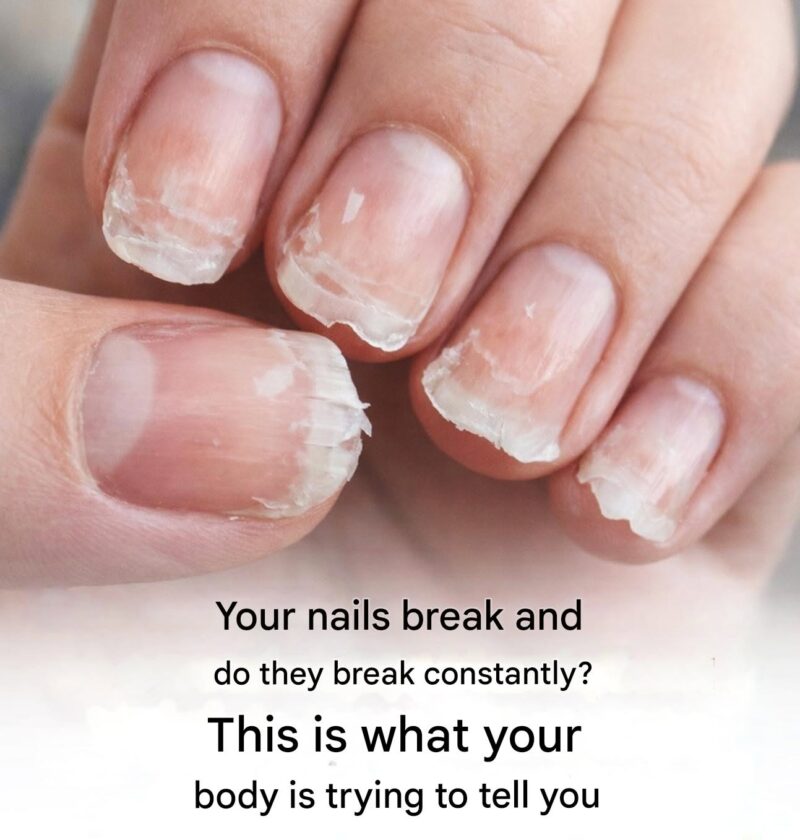
Brittle or fragile nails aren’t just a cosmetic issue—they can sometimes be a small clue about what’s happening inside your body. Nails reflect nutrition, hydration, and overall health, so changes in them can be meaningful.
Here’s what your body might be trying to tell you:
1. Nutrient deficiencies (very common)
Brittle nails often point to a lack of key nutrients:
- Iron deficiency (anemia) → nails may become thin, spoon-shaped, or easily break
- Biotin (Vitamin B7) deficiency → weak, splitting nails
- Zinc deficiency → slow nail growth and ridging
- Protein deficiency → nails lose strength and structure
2. Too much water or chemicals exposure
Frequent exposure to:
- Detergents
- Harsh soaps
- Constant hand washing
can strip natural oils from nails, making them dry and fragile.
3. Thyroid problems
An underactive thyroid (hypothyroidism) can cause:
- Slow-growing nails
- Dry, brittle texture
- Nails that break or peel easily
4. Aging and natural changes
As people age, nails naturally:
- Become thinner
- Grow slower
- Lose moisture
This is normal and not always a medical concern.
5. Fungal infections
A nail infection can make nails:
- Thick but crumbly
- Discolored (yellow or white patches)
- Fragile at the edges
6. Frequent nail trauma or habits
- Nail biting
- Using nails as tools
- Repeated manicures or gel polish removal
These weaken the nail structure over time.
7. Skin conditions
Some conditions like eczema or psoriasis can affect nails, causing:
- Pitting
- Splitting
- Rough texture
When to pay attention
See a doctor if:
- Only one nail is affected and worsening
- Nails are changing color (yellow, brown, black)
- You also have fatigue, hair loss, or weight changes
- Nails are detaching from the nail bed
Simple care tips
- Moisturize nails and cuticles daily
- Wear gloves for cleaning
- Eat a balanced diet with iron, protein, and vitamins
- Avoid harsh nail products