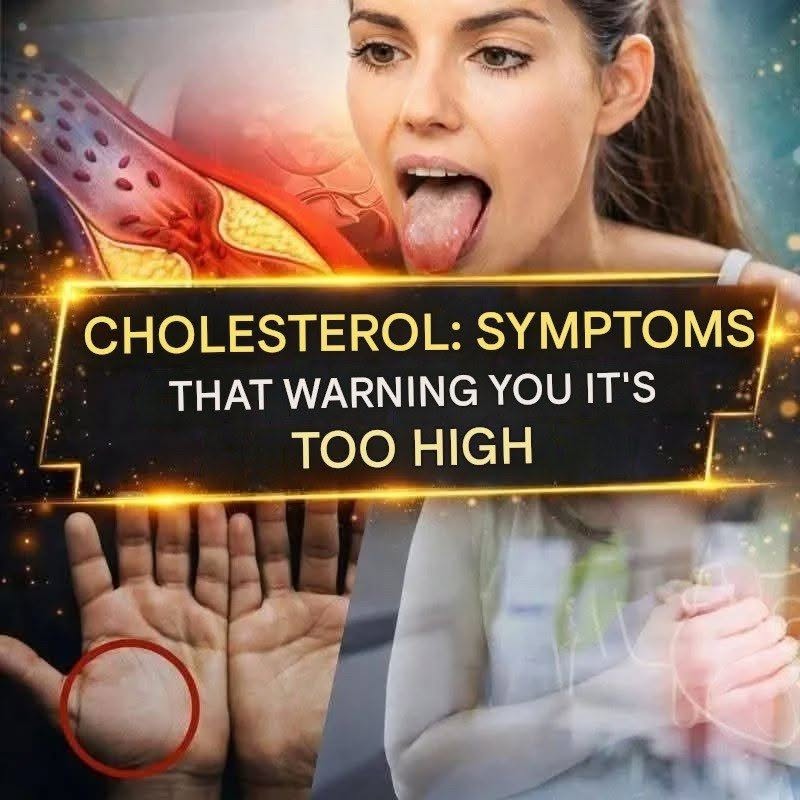
Cholesterol: 5 Symptoms That May Warn It’s Too High
High cholesterol is often called a “silent” condition because it usually does not cause noticeable symptoms on its own. Many people discover they have high cholesterol only after a blood test. However, long-term high cholesterol can contribute to plaque buildup in arteries, which may eventually lead to warning signs of reduced blood flow.
Here are 5 possible signs linked to complications of high cholesterol:
1. Chest pain or pressure
- A feeling of tightness, squeezing, or heaviness in the chest can occur when narrowed arteries reduce blood flow to the heart (angina).
- It may appear during exercise, stress, or exertion.
2. Pain or cramping in the legs while walking
- Blocked arteries in the legs (peripheral artery disease) can cause aching, heaviness, or cramps in the calves, thighs, or hips that improve with rest.
3. Shortness of breath or unusual fatigue
- If heart arteries become narrowed, the heart may not receive enough oxygen-rich blood, which can contribute to reduced exercise tolerance or tiredness.
4. Yellowish deposits around the eyes or skin
- Some people with very high cholesterol levels develop xanthomas (fatty deposits under the skin) or xanthelasma (yellowish patches around the eyelids).
- These are not common in everyone with high cholesterol but can be a clue to certain cholesterol disorders.
5. Signs of a stroke or reduced brain blood flow
Seek emergency care for:
- Sudden weakness or numbness on one side of the body
- Trouble speaking
- Sudden confusion
- Sudden vision changes
- Severe sudden headache