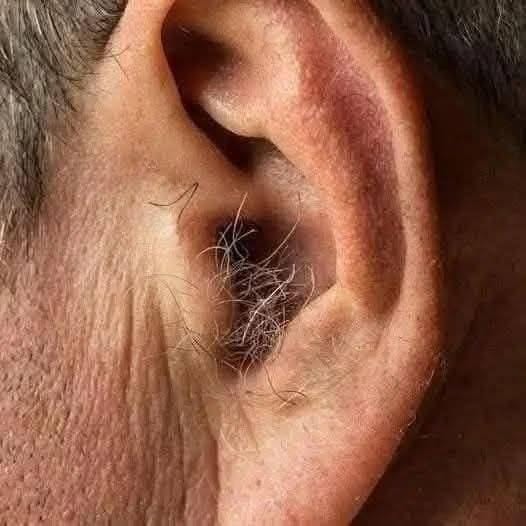
👂 “If hair grows in your ears, it’s because your body…”
This viral headline makes it sound as though ear hair is a warning sign of disease. Usually, it isn’t.
Why does ear hair grow?
Ear hair is normal body hair. As people age—particularly men—some hair follicles around the outer ear and ear canal can become more sensitive to androgens (male-type hormones), causing hairs to become thicker and more noticeable. Genetics also plays a role.
C
Cleveland Clinic
+1
In other words, ear hair is often simply a combination of aging, hormones and genetics, not a sign that something is wrong with your body.
C
Cleveland Clinic
+1
Does ear hair mean you have a health problem?
Not by itself. Claims that hairy ears automatically mean you have heart disease, diabetes, high cholesterol, poor circulation, or a vitamin deficiency aren’t justified.
If excessive hair growth appears suddenly or is accompanied by other unusual hormonal changes, however, it’s worth discussing with a healthcare professional. Rapidly developing excess body hair can occasionally be associated with hormonal disorders.
C
Cleveland Clinic
Should you remove it?
If you dislike visible ear hair, carefully trimming the hair on the outer ear is generally an option. Don’t push scissors, tweezers, cotton swabs or other objects deep into the ear canal. The canal is delicate, and objects inserted into it can cause injury.
C
Cleveland Clinic
+1
Ear hair also has a modest protective role by helping keep debris and foreign material out of the ear.
C
Cleveland Clinic
Bottom line: Hairy ears usually tell you more about your genetics, age and hormone sensitivity than about your overall health. It’s not, by itself, a diagnosis or a reason to worry.
C
Sources