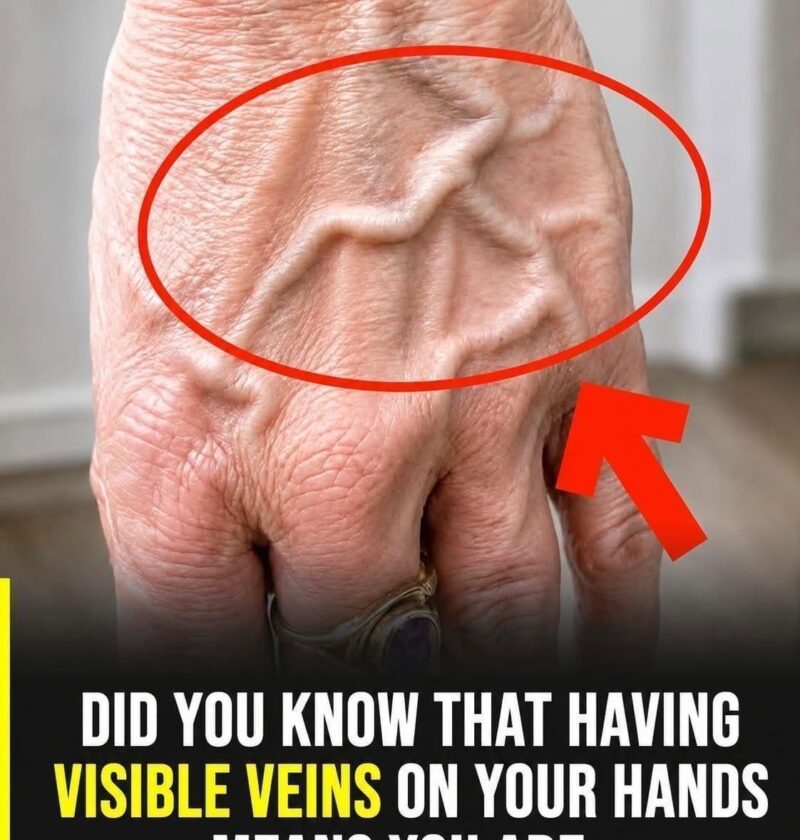
The headline “Did you know that having visible veins means you are…” is a common clickbait opener. Visible veins do not, by themselves, mean you have a specific health condition.
There are many normal reasons veins are easy to see:
- Low body fat: Less fat under the skin makes veins more noticeable.
- Exercise: Veins often become more prominent during or after exercise because of increased blood flow.
- Aging: Skin becomes thinner with age, making veins easier to see.
- Genetics: Some people naturally have more visible veins.
- Warm weather: Heat causes blood vessels to widen, making veins stand out more.
Sometimes, visible veins can be related to a medical condition, such as:
- Varicose veins – Enlarged, twisted veins that may ache, itch, or cause leg swelling.
- Chronic venous insufficiency – A condition where leg veins have trouble returning blood to the heart.
You should consider seeing a healthcare professional if your veins are accompanied by:
- Pain, heaviness, or swelling in the legs
- Skin discoloration or sores near the ankles
- A vein that suddenly becomes hard, red, warm, and painful
- Sudden swelling of one leg
So, visible veins alone are usually a normal variation, not evidence of poor circulation or a hidden disease. If the headline claims visible veins mean you’re dehydrated, have heart disease, or have “excellent circulation,” those are oversimplifications and are not generally true.