Here’s a clear, medically grounded breakdown.
First: what matters most
A TIA is defined by sudden onset neurological symptoms that go away within minutes to hours. Even if symptoms disappear, it is a medical emergency because it can be a warning sign of a full stroke.
Key warning signs of a TIA (the important ones)
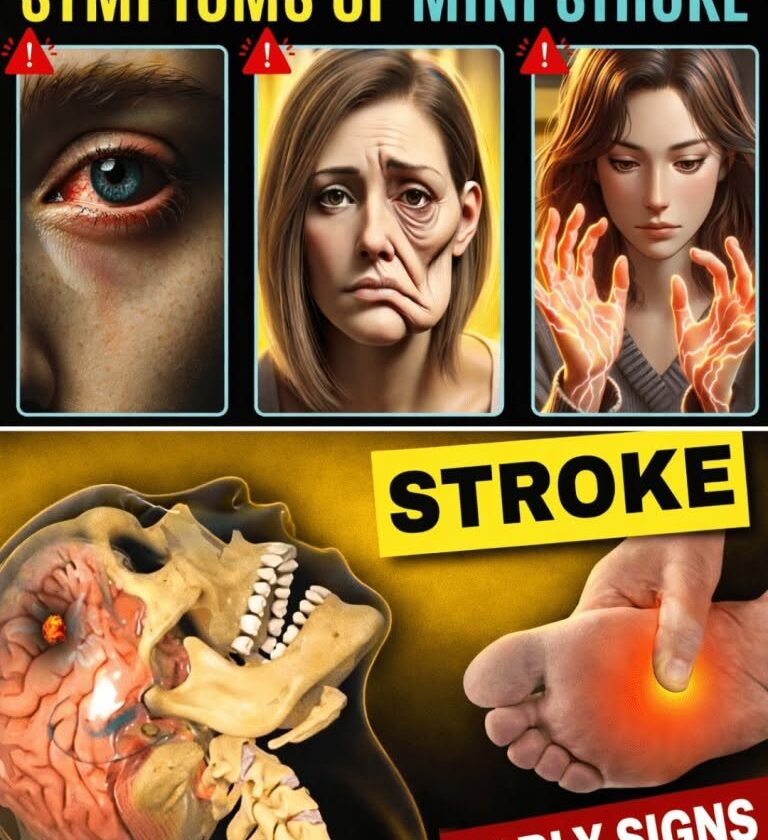
1. Sudden face drooping
One side of the face may feel weak or look uneven.
2. Arm or leg weakness (especially one side)
Difficulty lifting or holding objects.
3. Speech problems
- slurred speech
- difficulty finding words
- inability to speak clearly
4. Vision changes
- sudden loss of vision in one eye
- double vision
- blurry vision
5. Sudden dizziness or loss of balance
- trouble walking
- feeling unsteady
- coordination problems
These are the core stroke/TIA symptoms used in medical screening (often summarized as FAST).
Other possible but less specific symptoms
These can occur but are not specific to TIA on their own:
- sudden confusion
- numbness or tingling (especially one side)
- severe sudden headache (more common in hemorrhagic stroke than TIA)
- difficulty understanding speech
- brief memory disruption
- nausea with neurological symptoms
What viral lists get wrong
Posts often inflate the list with things like:
- fatigue
- anxiety
- mild headaches
- “brain fog”
- temporary vision strain
These are too nonspecific to reliably indicate a TIA on their own.
The key medical rule
A TIA is defined by:
sudden neurological deficit + temporary duration + no permanent damage on imaging
Not vague symptoms.
Why TIA is serious
Even if symptoms resolve:
- risk of full stroke is highest in the first 48 hours
- it signals underlying blood vessel disease
What to do if it happens
If any sudden stroke-like symptoms appear:
- call emergency services immediately
- do not wait for them to pass
Bottom line
- Real TIA symptoms are sudden, one-sided, and neurological
- Many “15 symptom” lists mix in unrelated or mild issues
- The safest rule is simple: sudden neurological change = urgent evaluation
If you want, I can also show you a simple FAST test checklist or explain how to distinguish TIA from migraine or anxiety symptoms, which is where most confusion happens.