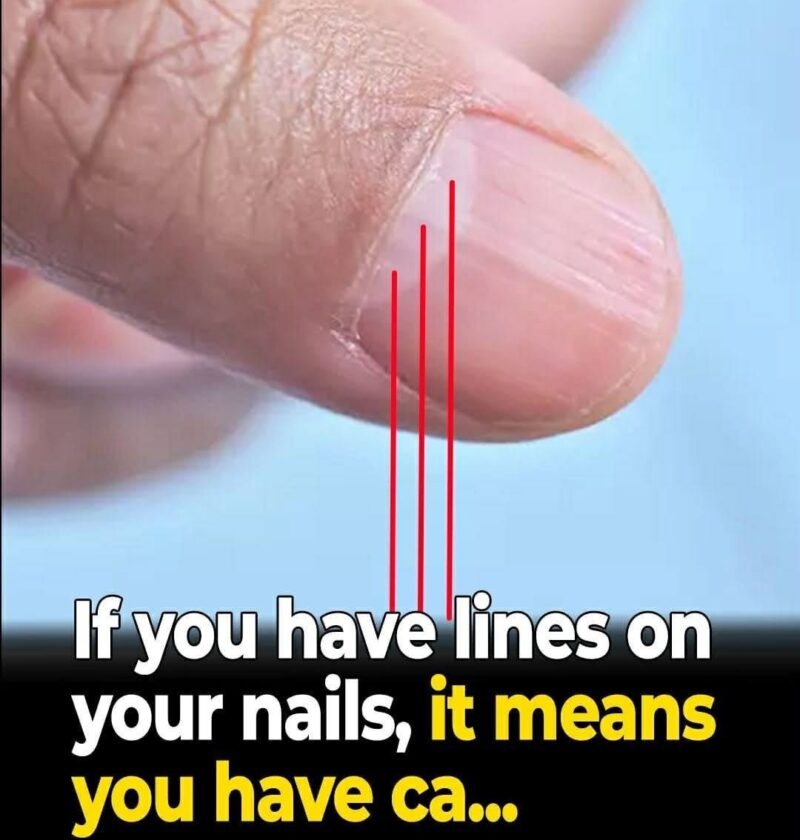
Headlines like “Doctor Uncovers a Telltale Sign in Your Fingernails That May Predict Your Life Expectancy” are usually exaggerated.
Your fingernails can provide clues about certain health conditions, but there is no single nail sign that reliably predicts how long someone will live.
Some nail changes that can be associated with health issues include:
- Clubbing (rounded, enlarged fingertips and curved nails): Can be associated with chronic lung disease, heart disease, or other conditions.
- Spoon-shaped nails (koilonychia): May be linked to iron deficiency.
- Pale nails: Can occur with anemia or other medical conditions.
- Yellow, thickened nails: Often caused by fungal infections, but occasionally associated with lung disease or lymphedema.
- Dark streaks: Most are harmless, but a new dark streak—especially if it widens or extends into the surrounding skin—should be evaluated promptly because it can rarely be a sign of melanoma.
- Beau’s lines: Horizontal grooves that can appear after a significant illness, high fever, or major stress on the body.
These changes do not predict life expectancy by themselves. Instead, they may be signs of an underlying condition that deserves medical attention.
You should consider seeing a healthcare professional if you notice:
- A new dark streak or black band in one nail.
- Clubbing of the fingers.
- Nail changes accompanied by shortness of breath, chest pain, fatigue, or unexplained weight loss.
- Nail changes that persist or worsen without an obvious cause.
In short, your nails can sometimes reflect your health, but they are not a reliable “life expectancy test.” If a nail change is concerning, the important step is to identify and treat any underlying condition rather than trying to estimate lifespan.