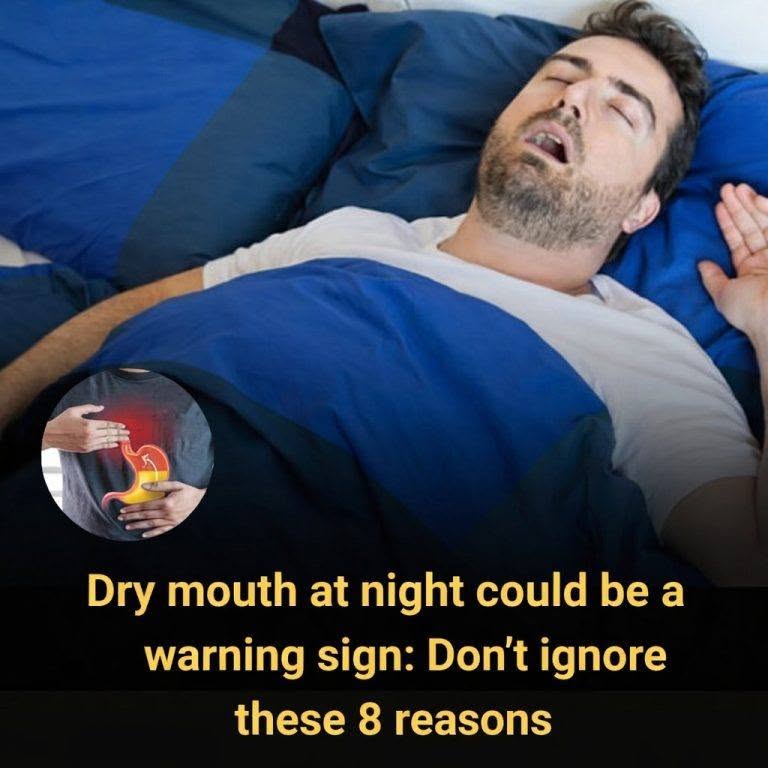
Dry mouth at night (also called nocturnal dry mouth) is common, but when it’s persistent, it can sometimes signal an underlying issue rather than just “sleeping with your mouth open.”
Here are 8 warning signs you shouldn’t ignore:
1) Constant thirst upon waking
If you regularly wake up needing water, it may suggest dehydration, mouth-breathing, or blood sugar issues.
2) Thick or sticky saliva
Saliva becomes unusually thick or stringy, which can point to reduced saliva production (xerostomia).
3) Bad breath that doesn’t improve with brushing
Saliva normally cleans bacteria—low saliva allows odor-causing bacteria to build up.
4) Difficulty swallowing dry foods
Crackers, bread, or dry meals feel hard to swallow without water.
5) Cracked lips or mouth sores
Repeated dryness can irritate oral tissues and cause small cuts or burning sensations.
6) Frequent nighttime waking
Dry mouth can disrupt sleep, especially if you wake up needing water repeatedly.
7) Increased tooth decay or sensitivity
Saliva protects teeth—low levels increase risk of cavities and enamel damage.
8) Dry eyes or dry skin along with dry mouth
When dryness affects multiple areas, it may suggest systemic causes (like medication side effects or autoimmune conditions).
Common causes include:
- Sleeping with mouth open (nasal congestion, snoring)
- Dehydration
- Certain medications (antihistamines, antidepressants, blood pressure drugs)
- Diabetes or blood sugar issues
- Sjögren’s syndrome (an autoimmune condition affecting moisture glands)
When to pay attention
It’s worth checking with a doctor if dry mouth:
- Happens most nights for weeks
- Affects sleep quality
- Comes with weight loss, fatigue, or excessive thirst
If you want, I can also show simple ways to reduce dry mouth at night naturally or explain which medications most commonly cause it.