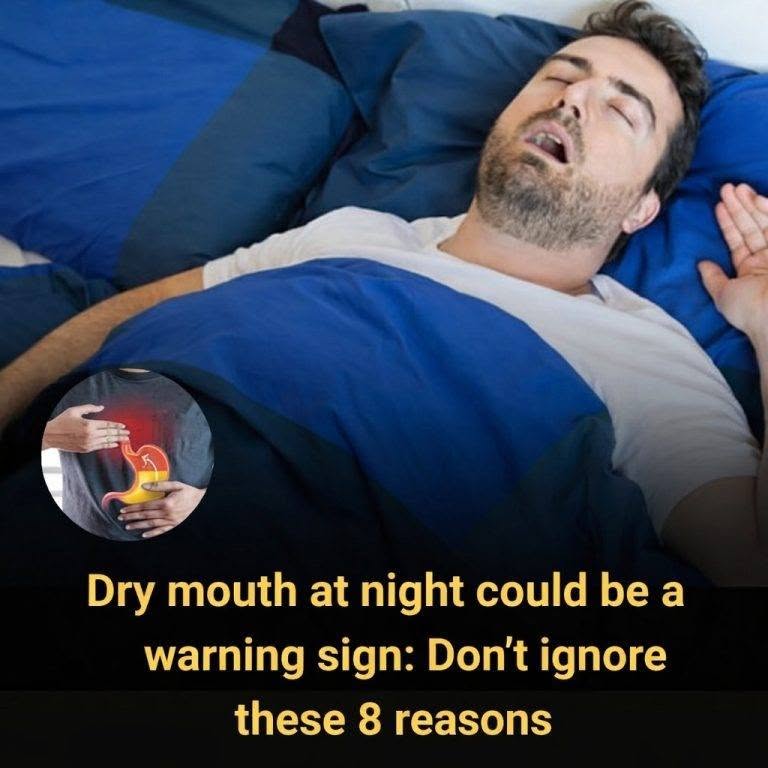
Dry Mouth at Night: 8 Warning Signs You Shouldn’t Ignore
Waking up with a dry mouth occasionally is common, but frequent nighttime dryness may be your body’s way of signaling an underlying issue.
1. You wake up very thirsty
Persistent nighttime thirst may be related to dehydration, mouth breathing, or blood sugar problems.
2. You snore loudly or wake up gasping
Dry mouth along with loud snoring, choking sensations, or daytime tiredness can be linked to sleep apnea.
3. You breathe through your mouth while sleeping
Nasal congestion, allergies, or sinus problems can force mouth breathing, which dries the mouth and throat.
4. You have morning bad breath
Reduced saliva during sleep allows bacteria to build up, causing unpleasant breath or taste.
5. You have difficulty swallowing or a sticky feeling in your mouth
Saliva helps keep tissues moist, so reduced saliva can make the mouth and throat uncomfortable.
6. You develop more cavities or gum problems
Saliva protects teeth by washing away food particles and helping control harmful bacteria.
7. You have dry mouth plus dry eyes or other dryness
A combination of symptoms may sometimes be associated with certain health conditions and should be discussed with a healthcare professional.
8. Your dry mouth started after a new medication
Many medicines can reduce saliva production, including some allergy medicines, antidepressants, blood pressure medicines, and pain medications.
Ways to help relieve nighttime dry mouth
- Drink enough water during the day.
- Use a humidifier if your bedroom air is dry.
- Treat blocked nasal passages or allergies.
- Avoid alcohol and tobacco, especially before bed.
- Brush and floss regularly.
- Ask a dentist or doctor about saliva substitutes if needed.
When to get medical advice
Seek help if dry mouth is persistent or accompanied by:
- Excessive thirst and frequent urination
- Unexplained weight loss
- Difficulty swallowing
- Mouth sores
- Signs of sleep apnea
A dry mouth in the morning is often caused by simple factors, but ongoing symptoms can sometimes point to a condition that needs attention.