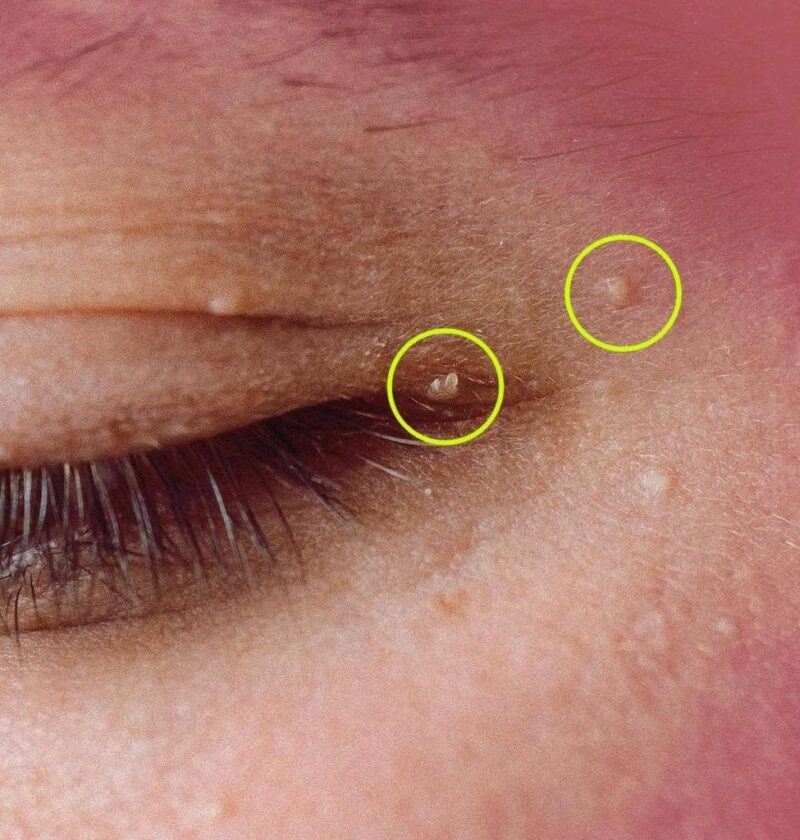
Milia are tiny, hard, white or yellowish bumps that often appear around the eyes, cheeks, nose, or forehead. They are sometimes called “fat cysts,” but they are actually small keratin-filled cysts—they contain trapped skin protein (keratin), not fat.
How to get rid of milia safely
1. Don’t squeeze or pop them
Unlike pimples, milia do not have an opening to drain. Trying to squeeze them can:
- Damage the skin
- Cause redness or infection
- Leave scars or dark marks
2. Use gentle exfoliation
Products that help remove dead skin buildup may gradually improve milia:
- Retinoids (such as adapalene or prescription retinoids) can encourage skin cell turnover.
- Alpha hydroxy acids (AHAs) like glycolic acid or lactic acid may help some people.
- Salicylic acid (BHA) can help with clogged pores, though milia are not typical acne.
Start slowly, especially around the eyes, because the skin there is sensitive.
3. Protect your skin from heavy products
Thick creams, oily products, and heavy makeup may contribute to milia in some people. Choose:
- Non-comedogenic moisturizers
- Gentle cleansers
- Lightweight skincare products
4. Professional removal
A dermatologist or trained skincare professional can remove stubborn milia using sterile techniques, often with a tiny opening made in the surface of the skin. This is usually quick and effective.
5. Prevent new milia
- Cleanse gently and regularly
- Avoid harsh scrubs that irritate the skin
- Use sunscreen daily
- Remove makeup before sleeping
When to see a dermatologist
Consider professional advice if:
- The bumps are spreading or changing
- They appear in large numbers
- They are around the eyes and difficult to treat
- You are unsure whether they are milia or another skin condition
Most milia are harmless and often disappear on their own over time, but persistent ones can usually be removed safely.