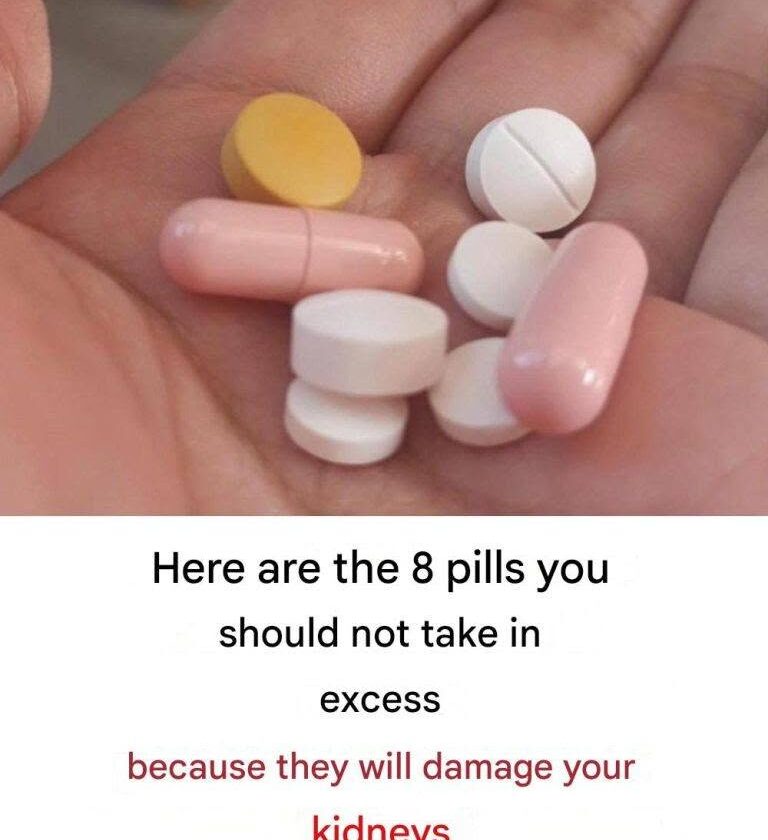
💊 “8 Pills You Shouldn’t Take Because They Damage Your Kidneys” — What’s the Truth?
The headline is too absolute. Many medicines that can affect the kidneys are safe and beneficial when appropriately prescribed. The real issue is which drug, the dose, your kidney function, and circumstances such as dehydration or drug interactions.
8 medication groups worth knowing about
- NSAID painkillers — such as ibuprofen and naproxen. Regular use can damage the kidneys, and the risk of acute kidney injury is higher when you’re dehydrated or already have kidney disease. (NIDDK)
- Certain antibiotics — some antibiotics can be potentially kidney-toxic, particularly in people with reduced kidney function or when given at high doses. (NIDDK)
- Aminoglycoside antibiotics — medicines such as gentamicin and amikacin can cause kidney injury and generally require appropriate dosing and monitoring.
- Some antiviral medicines — certain antivirals can affect kidney function and may require dose adjustments depending on kidney health.
- Lithium — long-term treatment can affect kidney function, so people taking it generally need periodic monitoring.
- Certain chemotherapy medicines — some cancer treatments can be nephrotoxic, which is why kidney function is monitored during treatment.
- Diuretics (“water pills”) in certain circumstances — these aren’t inherently kidney-damaging and are often important for treating blood pressure and fluid retention. However, excessive fluid loss or dehydration can contribute to kidney injury. (NIDDK)
- Some medicines used with contrast imaging — the bigger concern is often the contrast agent itself, particularly in people with impaired kidney function or certain other risk factors. (NIDDK)
⚠️ One important misconception
ACE inhibitors and ARBs are not simply “kidney-damaging pills.” Medicines such as lisinopril and losartan can actually protect kidney function and slow progression of some forms of chronic kidney disease. They may nevertheless require kidney-function and potassium monitoring, particularly after starting or changing the dose. (NIDDK)
🩺 Protect your kidneys
If you have kidney disease, diabetes, high blood pressure, or are older, ask your pharmacist or doctor to review all prescription medicines, over-the-counter drugs, and supplements you’re taking. Don’t stop a prescribed medication because of an internet list. (NIDDK)
Bottom line: The biggest everyday medication warning is regular NSAID use, especially during dehydration. The safest approach isn’t avoiding eight particular pills—it’s making sure every medication is appropriate for your kidney function and current health.