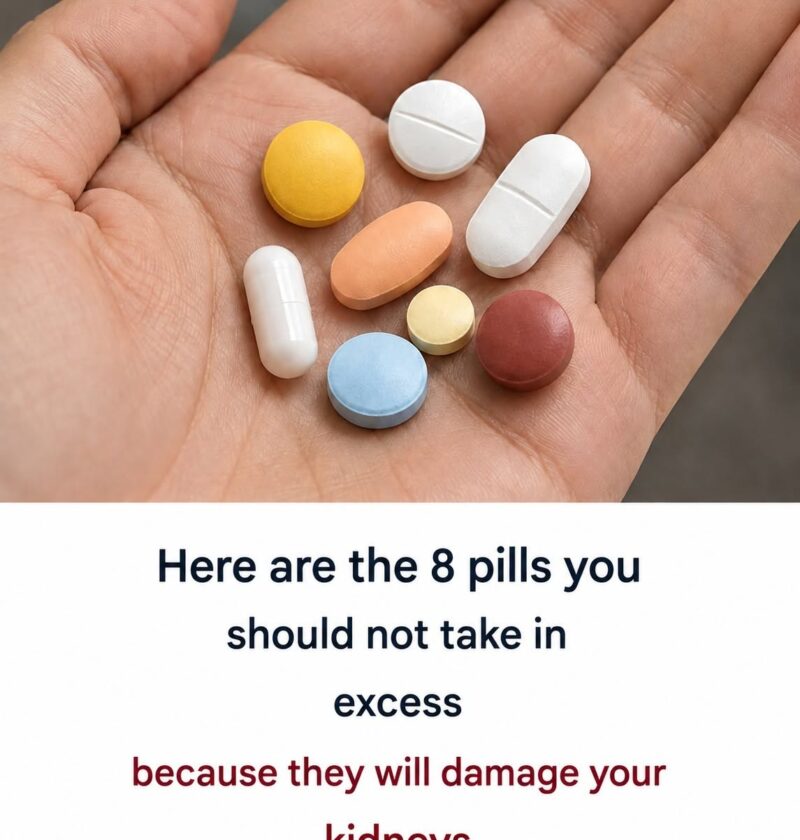
Eight Medicines That Can Harm the Kidneys—And What to Know
The headline “eight pills you shouldn’t take” is too absolute. Many of these medicines are useful and appropriate when prescribed. The risk depends on your kidney function, dose, duration, hydration, and other medicines you take.
N
National Kidney Foundation
+1
Eight important examples to discuss with a doctor or pharmacist are:
Ibuprofen — an NSAID that can reduce blood flow to the kidneys, particularly with high doses, prolonged use, dehydration, or existing kidney disease.
Naproxen — another NSAID with similar kidney risks.
Diclofenac — can contribute to kidney injury, especially in people already at higher risk.
Meloxicam — an NSAID that can worsen kidney function in susceptible people.
Celecoxib — a prescription NSAID that also requires kidney precautions.
High-dose aspirin — doses above 325 mg/day can act like an NSAID on the kidneys. Low-dose aspirin prescribed for cardiovascular protection is different and should not be stopped without medical advice.
N
National Kidney Foundation
Lithium — long-term treatment can affect kidney function and requires monitoring.
N
National Kidney Foundation
Certain antibiotics, antivirals, and antifungals — some can directly injure the kidneys or accumulate when kidney function is reduced; often the solution is adjusting the dose rather than avoiding treatment.
N
National Kidney Foundation
A particularly important warning
The combination of an ACE inhibitor or ARB + a diuretic + an NSAID, especially during dehydration, can substantially increase the risk of acute kidney injury.
N
National Kidney Foundation
Also, don’t assume that every medicine affecting kidney blood tests is “damaging your kidneys.” ACE inhibitors and ARBs can actually protect the kidneys in many people with kidney disease, despite causing a small initial change in eGFR.
N
National Kidney Foundation
Never stop a prescribed medicine on your own. If you’re concerned about kidney safety, have your pharmacist or doctor review your complete list—including over-the-counter painkillers, vitamins, and supplements—and check your kidney function (eGFR).
N
National Kidney Foundation
N
Sources