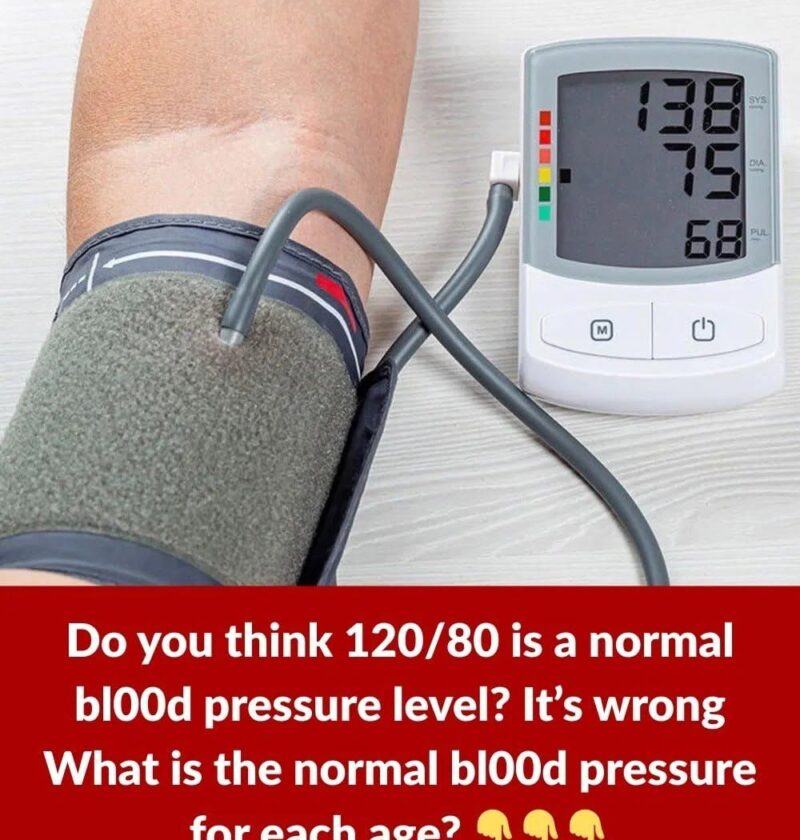
The claim “Everyone has made this mistake. What is the normal blood pressure for each age?” is a common online headline, but the idea that there is a completely different “normal” blood pressure for every age is not accurate.
Blood pressure is influenced by age, genetics, health conditions, medications, activity level, and lifestyle. In general, doctors use standard adult blood pressure categories rather than a simple age-based chart.
General blood pressure ranges (adults)
| Category | Systolic (top number) | Diastolic (bottom number) |
|---|---|---|
| Normal | Less than 120 | and less than 80 |
| Elevated | 120–129 | and less than 80 |
| High blood pressure (Stage 1) | 130–139 | or 80–89 |
| High blood pressure (Stage 2) | 140 or higher | or 90 or higher |
| Hypertensive crisis* | 180 or higher | and/or 120 or higher |
*A reading this high, especially with symptoms such as chest pain, shortness of breath, weakness, confusion, or vision changes, requires urgent medical attention.
What about age?
Blood pressure often tends to rise as people get older because blood vessels can become less flexible. However:
- A person in their 70s does not automatically have a “normal” blood pressure of 150/90.
- Many older adults can and do have healthy readings closer to standard targets.
- Individual targets may differ, especially for people with heart disease, kidney disease, diabetes, or other conditions.
Common mistakes when checking blood pressure
- Measuring immediately after exercise, caffeine, smoking, or stress.
- Using a cuff that is the wrong size.
- Not resting quietly for a few minutes before measuring.
- Relying on one reading instead of checking trends over time.
How to get a more accurate reading
- Sit quietly for about 5 minutes before measuring.
- Keep feet flat on the floor and your arm supported.
- Take multiple readings at different times and discuss the pattern with a healthcare professional.
Bottom line: There is no single “normal blood pressure” number for each age group. A reading around 120/80 mmHg is often considered a healthy reference point for adults, but the right target depends on the individual’s health situation.