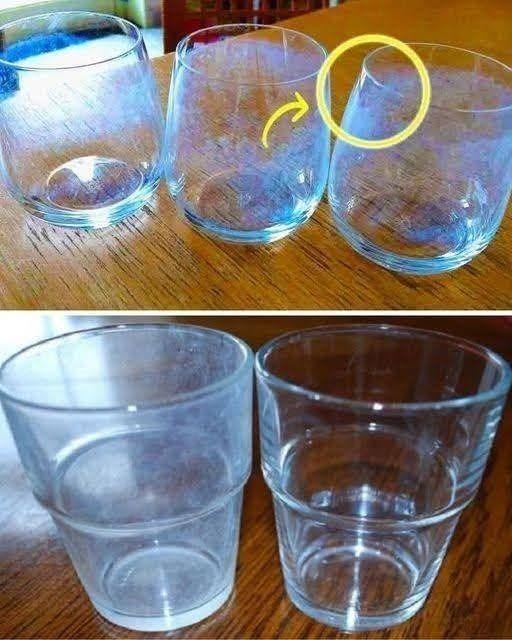
A white, cloudy film on drinking glasses is usually caused by hard water mineral deposits (such as calcium and magnesium) or, less commonly, permanent etching from repeated dishwasher use. If it’s mineral buildup, you can often remove it with household acids.
Method 1: White vinegar (best for mineral deposits)
- Fill a bowl with equal parts white vinegar and warm water, or use straight vinegar for heavier buildup.
- Soak the glasses for 15–30 minutes.
- Gently scrub with a soft sponge or microfiber cloth.
- Rinse thoroughly with clean water.
- Dry with a lint-free towel to restore shine.
Method 2: Lemon juice
- Rub the cloudy areas with fresh lemon juice or soak the glass in lemon juice for 15–20 minutes.
- Rinse and dry well.
Method 3: Baking soda paste (for stubborn spots)
- Mix baking soda with a small amount of water to make a paste.
- Gently rub with a soft cloth.
- Rinse thoroughly.
Avoid using abrasive scouring pads, as they can scratch the glass.
How to tell if the cloudiness is permanent
Try placing a few drops of vinegar on the cloudy area:
- If the cloudiness disappears or improves, it’s likely mineral deposits that can be cleaned away.
- If nothing changes, the glass may be etched. Etching is permanent and cannot be polished out with household methods.
Prevent future white patina
- Use a dishwasher rinse aid if washing in a dishwasher.
- Reduce dishwasher temperature if possible.
- Dry glasses promptly after washing.
- If you have hard water, consider using softened or filtered water for washing.
Bottom line: There isn’t a secret “cool trick” that works in every case, but soaking glasses in white vinegar is one of the most effective and well-established ways to remove hard water deposits and restore their shine. If the haze is due to etching, however, it cannot be reversed.