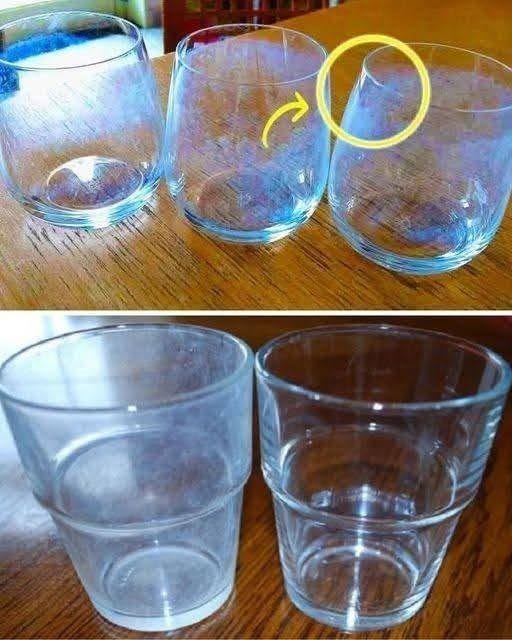
Before you begin, it’s helpful to determine whether the cloudiness is caused by mineral deposits, which can often be removed, or glass etching, which is permanent.
Why Do Glasses Develop a White Film?
Several factors can leave glasses looking cloudy:
- Hard water: Minerals such as calcium and magnesium can build up on the surface.
- Detergent residue: Too much dishwasher detergent or incomplete rinsing may leave a film.
- High dishwasher temperatures: Repeated exposure to high heat can contribute to cloudiness.
- Glass etching: Over time, harsh detergents and high temperatures can permanently damage the glass surface.
How to Tell the Difference
A quick test can help identify the cause:
- Place a few drops of white vinegar on the cloudy area.
- Let it sit for about 5 minutes.
- Rinse and dry the glass.
- If the cloudiness disappears, it was likely caused by mineral deposits.
- If the cloudiness remains unchanged, the glass may be etched, which cannot be reversed.
The Vinegar Soak
White vinegar is one of the most effective ways to dissolve hard water deposits.
What You’ll Need
- White vinegar
- Warm water
- A soft microfiber cloth or non-abrasive sponge
Instructions
- Fill a bowl with equal parts warm water and white vinegar.
- Submerge the glasses for 15–30 minutes.
- Gently wipe the surface with a soft cloth or sponge.
- Rinse thoroughly with clean water.
- Dry immediately with a lint-free towel for the best shine.
Baking Soda for Stubborn Residue
If some deposits remain, baking soda can provide gentle cleaning.
- Mix a small amount of baking soda with water to form a paste.
- Apply the paste using a soft cloth.
- Rub gently in circular motions.
- Rinse well and dry.
Avoid scrubbing aggressively, as abrasive cleaning can scratch delicate glass.
Lemon Juice for Extra Shine
The natural acidity of lemon juice can help remove light mineral residue while leaving glasses looking bright.
- Rub half a lemon over the cloudy area or soak the glass briefly in diluted lemon juice.
- Rinse thoroughly.
- Dry with a microfiber cloth.
Prevent Cloudiness in the Future
To keep your glasses crystal clear:
- Use the recommended amount of dishwasher detergent.
- Add a rinse aid if your dishwasher recommends it.
- If you have hard water, consider using a dishwasher salt or water softener if compatible with your appliance.
- Avoid overcrowding the dishwasher so water can circulate properly.
- Dry glasses promptly after washing to reduce water spots.
Wash Delicate Glassware by Hand
Fine crystal and delicate glasses often last longer when washed by hand.
Use:
- Warm (not hot) water
- Mild dish soap
- A soft sponge
- A lint-free towel for drying
This gentle approach helps reduce the risk of etching and scratches.
Avoid These Common Mistakes
To protect your glassware:
- Don’t use steel wool or abrasive scouring pads.
- Avoid harsh cleaners intended for ovens or heavy-duty surfaces.
- Don’t expose delicate glass to sudden temperature changes, which can cause cracking.
- Avoid excessive dishwasher detergent, especially in areas with soft water.
When Cloudiness Can’t Be Removed
If vinegar and gentle cleaning methods don’t improve the appearance, the glass has likely been etched. Etching occurs when the surface is permanently worn away, often after years of dishwasher use or exposure to harsh detergents.
Although etched glass cannot be restored to its original clarity, it is generally still safe to use unless it has chips or cracks.
The Bottom Line
Cloudy glasses are often the result of mineral deposits rather than permanent damage. A simple soak in white vinegar, followed by gentle cleaning and thorough drying, can restore shine in many cases. By using the right cleaning methods and avoiding harsh detergents or abrasive tools, you can help keep your glassware sparkling for years to come.