Flowering is relatively uncommon indoors, but with the right growing conditions and a little patience, you may encourage your plant to bloom. When it does, the blossoms often release a sweet fragrance, especially during the evening.
Can a Snake Plant Really Bloom?
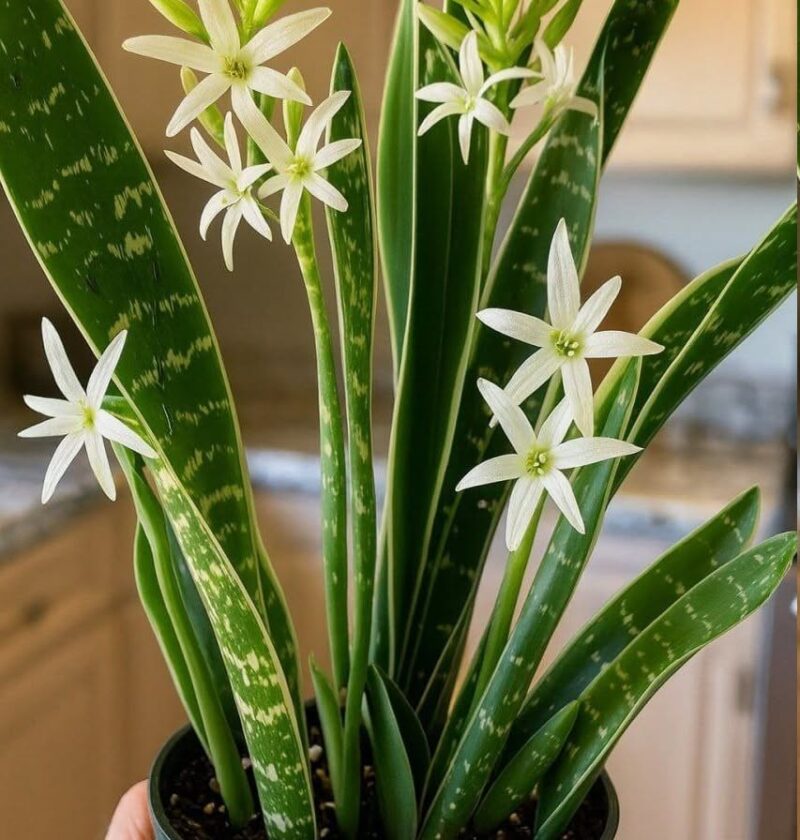
Yes. Although it’s primarily grown as a foliage plant, a mature and healthy snake plant can produce tall flower stalks covered with clusters of creamy white or pale green flowers.
Indoor blooming is less common than outdoor flowering in warm climates, but it is entirely possible under favorable conditions.
What the Flowers Look Like
Snake plant flowers typically feature:
- Long, slender flower stalks
- Small tubular flowers in creamy white or pale green
- Delicate, curling petals
- A sweet, pleasant fragrance that is often strongest at night
- Tiny droplets of nectar on the blossoms
The blooms may last for several weeks before fading.
Provide Plenty of Bright Light
Light is one of the most important factors for encouraging flowering.
For the best chance of blooms:
- Place the plant in bright, indirect sunlight.
- A few hours of gentle morning sun can be beneficial.
- Avoid prolonged harsh afternoon sunlight, which may scorch the leaves.
- Rotate the pot occasionally so all sides receive even light.
Plants kept in very low light are much less likely to flower.
Avoid Overwatering
Snake plants prefer soil that dries out between waterings.
A good watering routine includes:
- Water thoroughly, then allow the soil to dry before watering again.
- Reduce watering during cooler months when growth naturally slows.
- Never leave the pot sitting in water.
Overwatering can lead to root rot and reduce the plant’s overall health.
Use Well-Draining Soil
Healthy roots are essential for vigorous growth and potential flowering.
A potting mix designed for cacti or succulents works well because it drains excess water quickly. You can also improve drainage by adding coarse sand or perlite to a standard indoor potting mix.
Don’t Choose a Pot That’s Too Large
Snake plants often grow well when they’re slightly root-bound.
A pot that is only a little larger than the root system encourages the plant to focus on growth rather than expanding its roots. Repot only when the roots have clearly outgrown the container.
Fertilize Sparingly
During spring and summer, feed the plant with a balanced liquid houseplant fertilizer according to the product’s directions.
Avoid over-fertilizing, especially with high-nitrogen fertilizers, which encourage leafy growth instead of flowering.
Maintain Warm Temperatures
Snake plants thrive in warm indoor environments.
Ideal conditions include:
- Temperatures between 18–29°C (65–85°F)
- Protection from cold drafts
- Avoiding temperatures below 10°C (50°F)
Stable temperatures help support healthy growth.
Be Patient
Flowering is usually a sign that the plant has reached maturity and is growing under favorable conditions.
Even with excellent care, many indoor snake plants bloom only occasionally. Some may flower after several years, while others may never bloom indoors.
Caring for the Flowers
If your plant blooms:
- Enjoy the natural fragrance.
- Avoid cutting the flower stalk until it has completely finished blooming.
- Continue normal watering and light conditions.
- Wipe away any sticky nectar if it drips onto nearby surfaces.
Once flowering ends, the stalk will naturally dry and can be removed with clean pruning shears.
Common Mistakes to Avoid
To give your snake plant the best chance of flowering:
- Don’t overwater.
- Avoid placing it in very dark corners.
- Don’t repot too frequently.
- Avoid excessive fertilizer.
- Protect it from freezing temperatures.
Does Flowering Mean the Plant Is Stressed?
A common belief is that snake plants bloom only when stressed. While mild root confinement may coincide with flowering, there is no evidence that intentionally stressing the plant is necessary or beneficial. In most cases, flowering is simply associated with a mature, healthy plant growing under suitable conditions.
The Bottom Line
A blooming mother-in-law’s tongue is a rewarding surprise for any plant lover. While flowering indoors is not guaranteed, providing bright indirect light, well-draining soil, careful watering, moderate feeding, and warm temperatures gives your snake plant the best opportunity to produce its beautiful, fragrant blossoms. With patience and consistent care, you may one day enjoy the rare sight—and scent—of this remarkable houseplant in bloom.