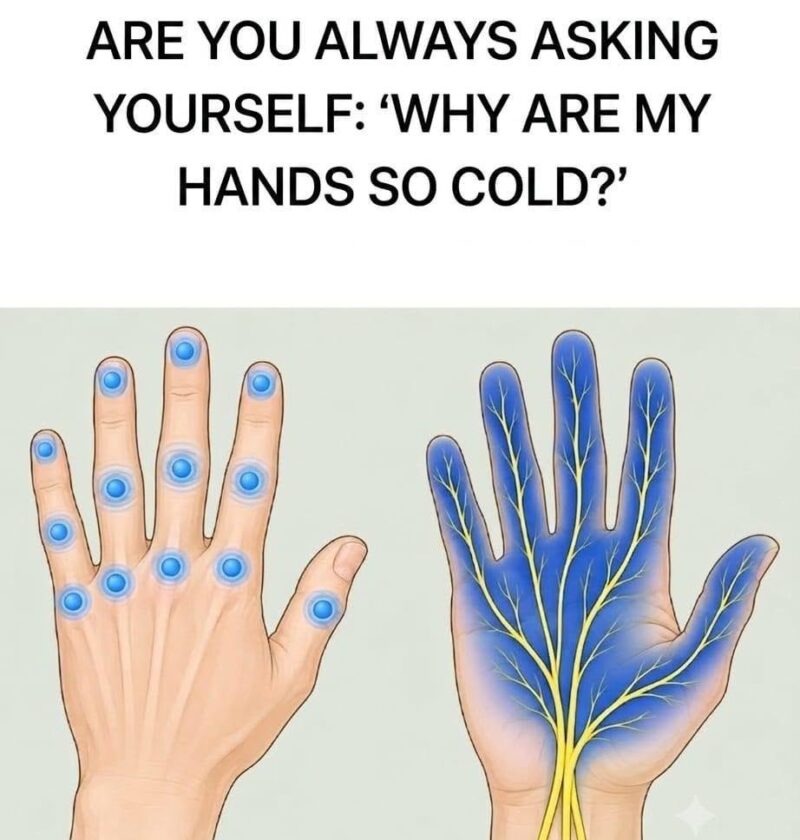
Cold hands are common and often harmless, but persistently cold hands can sometimes signal an underlying health issue.
Here are some common causes and what may help:
1. Cold temperatures
Your body naturally reduces blood flow to the hands to conserve heat.
What may help:
- Wear gloves or mittens outdoors.
- Dress in layers and keep your core warm.
2. Reduced circulation
Poor circulation can make your hands feel cold, especially in older adults or people with cardiovascular disease.
What may help:
- Stay physically active.
- Avoid smoking, which narrows blood vessels.
- Manage conditions like high blood pressure and diabetes.
3. Raynaud’s phenomenon
This condition causes the small blood vessels in the fingers to spasm in response to cold or stress. Fingers may turn white, blue, then red as blood flow changes.
What may help:
- Keep your hands warm.
- Avoid sudden exposure to cold.
- Manage stress.
- Some people benefit from prescription medications if symptoms are severe.
4. Anemia
A low red blood cell count can contribute to feeling cold, along with fatigue and shortness of breath.
What may help:
- See a healthcare professional for testing and treatment if anemia is suspected.
5. An underactive thyroid
Low thyroid hormone levels can slow metabolism and increase sensitivity to cold.
Other symptoms may include:
- Fatigue
- Weight gain
- Dry skin
- Constipation