🌿 How to Make a Homemade Herbicide That Actually Works
A common DIY recipe uses vinegar, salt, and dish soap, but there are important drawbacks. Vinegar is a contact herbicide: it burns the foliage it touches but generally doesn’t kill established roots, so perennial weeds can grow back. (Ask Extension)
A safer approach
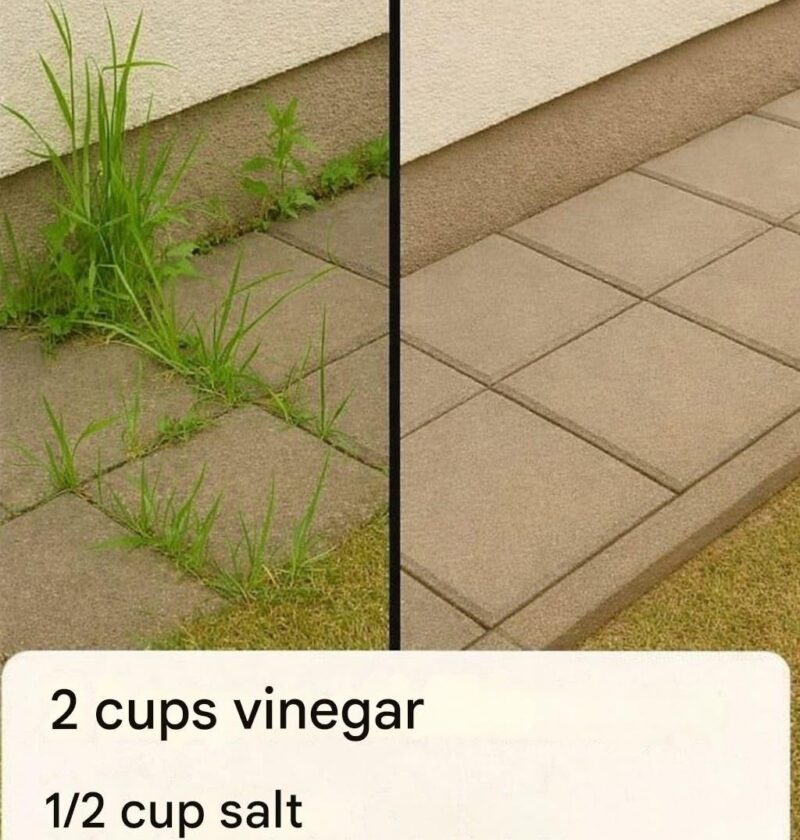
For small weeds growing between patio stones, driveway cracks, or other areas where you don’t want plants, use plain household white vinegar as a targeted treatment:
- Choose a warm, dry day with no rain expected.
- Apply the vinegar directly to the weed foliage.
- Avoid desirable plants and nearby soil as much as possible.
- Repeat if necessary, because established weeds may regrow.
Household vinegar is typically about 5% acetic acid and works best on small, young annual weeds. (Ask Extension)
🚫 Skip the salt
Although salt is frequently included in internet recipes, extension specialists don’t recommend adding it. Repeated salt applications can accumulate in soil, harm desirable plants, and interfere with soil structure and water movement. (Ask Extension)
⚠️ Don’t try to make stronger vinegar yourself
Horticultural vinegar containing 10–20% or more acetic acid can be substantially more effective, but it is also caustic and can cause serious skin and eye injuries. If using a commercial herbicide, follow its label and protective-equipment requirements exactly. (Ask Extension)
Bottom line: For a simple home remedy, targeted household vinegar can knock back small weeds, but it isn’t a miracle weed killer. For persistent perennial weeds, pulling/digging, mulching, or an appropriately labeled commercial herbicide is generally more reliable.