Picking a good watermelon is mostly about looking for signs that it ripened properly on the vine.
🍉 1. Check the field spot
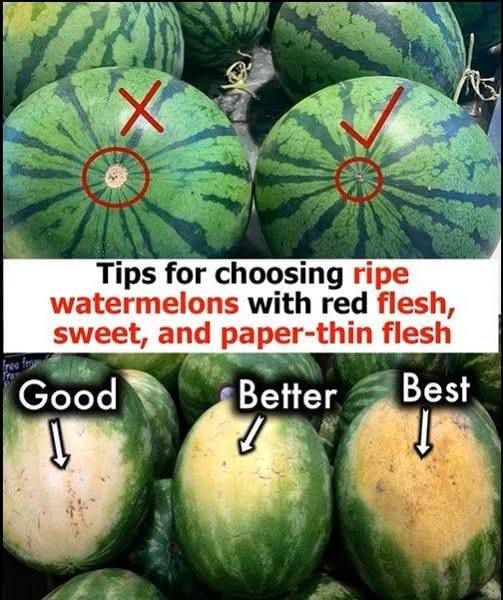
Look for a large creamy-yellow or golden-yellow patch on one side.
- Good: Deep yellow/cream color
- Less ripe: White or very pale spot
This is the area where the watermelon rested on the ground while ripening.
🍉 2. Pick it up
A ripe watermelon should feel heavy for its size. More weight generally means more water content and juiciness.
🍉 3. Look for a dull finish
- Good: Matte or dull skin
- Less ripe: Very shiny skin
A shiny watermelon is often less mature.
🍉 4. Tap it
Give it a firm knock.
- Good: Deep, hollow sound
- Less ripe or overripe: Dull, flat, or overly soft sound
This test takes practice, but it can help when comparing several melons.
🍉 5. Check the shape
Choose one that is:
- Symmetrical
- Free of major dents, cuts, or soft spots
Odd bulges or irregular shapes can indicate uneven growing conditions.
🍉 6. Look for webbing and sugar spots (optional clue)
Brown, rough web-like marks or small sugar spots on some varieties can indicate strong pollination and sweetness, though this isn’t a foolproof test.
🚩 Avoid watermelons that:
- Have soft spots
- Feel unusually light for their size
- Have cuts, cracks, or mold
- Show a very white field spot
Quick rule
If you only remember three things:
- Heavy for its size
- Creamy yellow field spot
- Dull, not shiny, skin
Those three indicators are among the most reliable ways to improve your chances of getting a sweet, ripe watermelon. 🍉