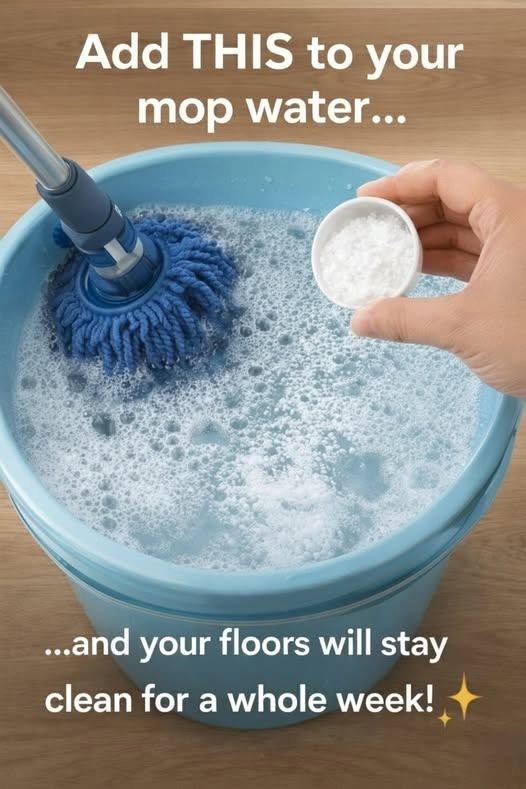
🧹 I Didn’t Believe This Floor Trick Until I Tried It… Now I’ll Never Go Back
If the “trick” you’re seeing online is vinegar and water, it can work on some hard floors—but it is not safe for every type of flooring.
✨ For tile and many sealed hard surfaces
A simple solution of white vinegar diluted with plenty of water can help remove everyday grime and mineral residue. Always test a small, inconspicuous area first.
⚠️ Don’t use vinegar on these floors
- Marble, granite, limestone, and other natural stone — acids can etch the surface.
- Waxed or unfinished wood
- Many hardwood floors — repeated vinegar use can degrade the protective finish.
- Any flooring for which the manufacturer specifically prohibits acidic cleaners. (Bona)
For hardwood, a pH-neutral cleaner specifically made for your floor and a barely damp microfiber mop are safer choices. Avoid soaking the floor or leaving standing water. (Bona)
🧼 The simple “floor trick” that works almost everywhere
- Vacuum or sweep first.
- Use the cleaner recommended for your particular flooring.
- Apply only a small amount of moisture.
- Mop with a clean microfiber pad.
- Allow the floor to dry rather than leaving it wet.
And never mix vinegar with bleach—the combination can produce dangerous chlorine gas.
Bottom line: The real secret isn’t a miracle ingredient. Using the right cleaner for the floor type—and avoiding excess water—is what keeps floors clean without damaging them.