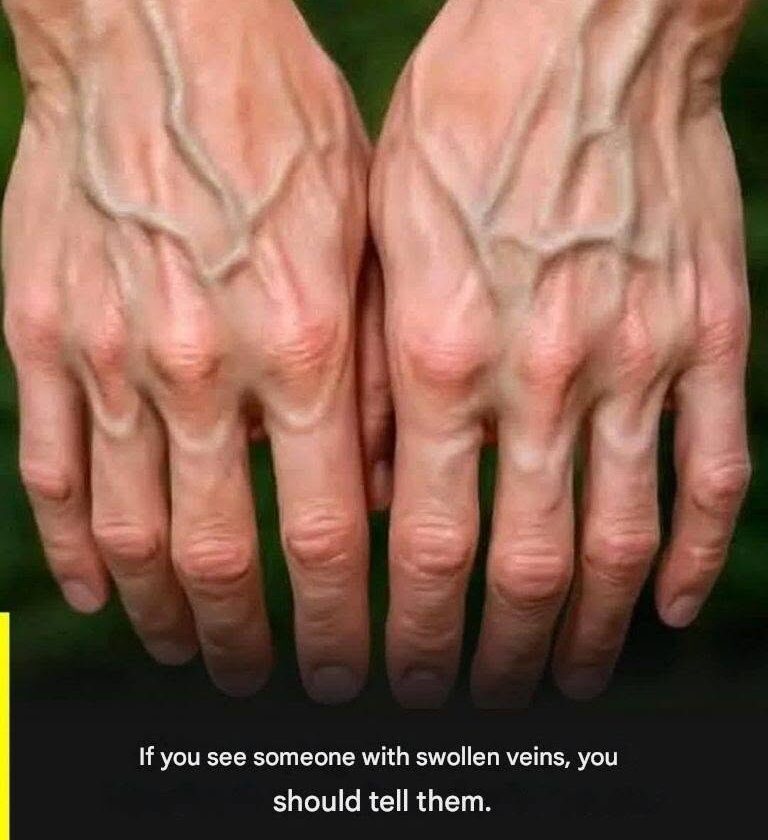
The claim “If your veins are visible, it means that…” is often used in viral posts, but visible veins do not automatically indicate a specific health condition.
Visible veins can be completely normal and may be influenced by:
- Lower body fat: Less tissue under the skin can make veins more noticeable.
- Genetics: Some people naturally have more prominent veins.
- Thin or lighter-colored skin: Veins may show through more easily.
- Exercise: Increased blood flow and muscle development can make veins stand out, especially after workouts.
- Heat: Warm temperatures can widen blood vessels and make them more visible.
- Age: Skin becomes thinner over time, making veins easier to see.
Sometimes visible veins can be related to medical issues, such as varicose veins, which are enlarged, twisted veins that may cause aching, heaviness, swelling, or discomfort.
Seek medical advice if you notice:
- A vein that suddenly becomes enlarged or painful.
- Redness, warmth, or swelling around a vein.
- Skin changes or sores near visible veins.
- One-sided leg swelling.
Bottom line: Visible veins are usually just a normal variation in the body and do not, by themselves, mean you are unhealthy or exceptionally healthy. The context—such as symptoms, changes, and location of the veins—matters.