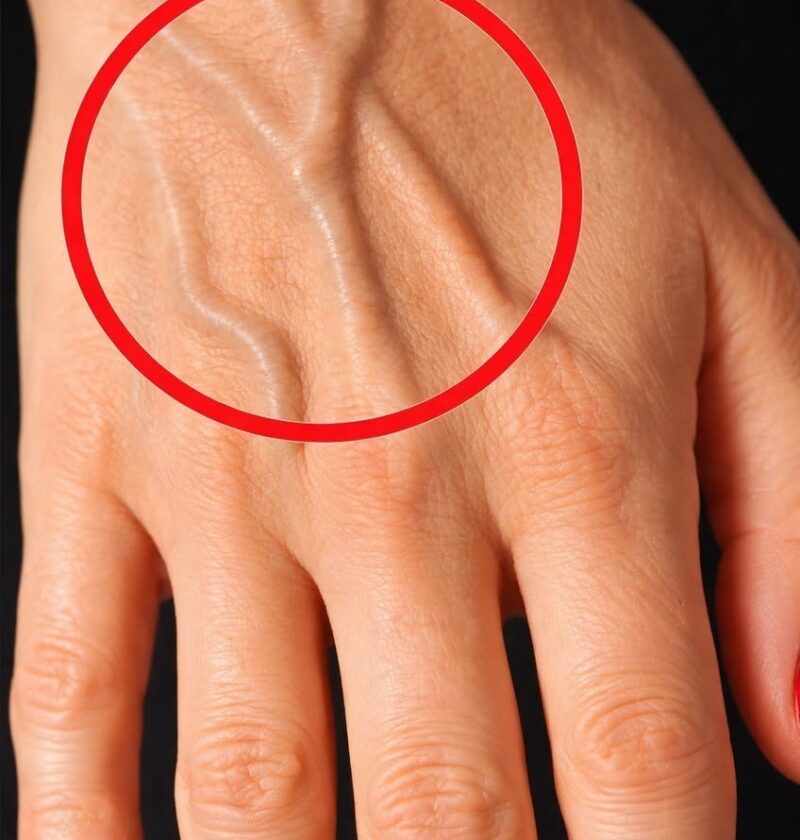
Visible veins do not necessarily mean anything is wrong. They are often a normal variation.
Common reasons veins are more visible include:
- Thin or fair skin, which makes veins easier to see.
- Low body fat, so there is less tissue covering the veins.
- More muscle mass, especially in athletes.
- Aging, as skin becomes thinner and loses elasticity.
- Heat or exercise, which causes veins to widen temporarily.
- Genetics, as some people naturally have more prominent veins.
Less commonly, very prominent veins may be associated with conditions such as varicose veins (especially in the legs) or, rarely, problems affecting blood flow.
genui{“biology_anatomy_physiology_learning_block”:{“type_id”:”BLOOD_CIRCULATION”}}
You should consider seeing a healthcare professional if visible veins are accompanied by:
- Pain, tenderness, or swelling
- Redness or warmth over a vein
- Sudden appearance of one very enlarged vein
- Leg heaviness, skin discoloration, or ulcers
So, if someone says, “If your veins are visible, it means you are…,” the most accurate completion is:
“…likely just showing a normal variation in your body, often due to thin skin, low body fat, muscle development, genetics, or temporary changes like heat or exercise.”
Visible veins alone are not a reliable sign of being dehydrated, vitamin deficient, or having a specific disease.