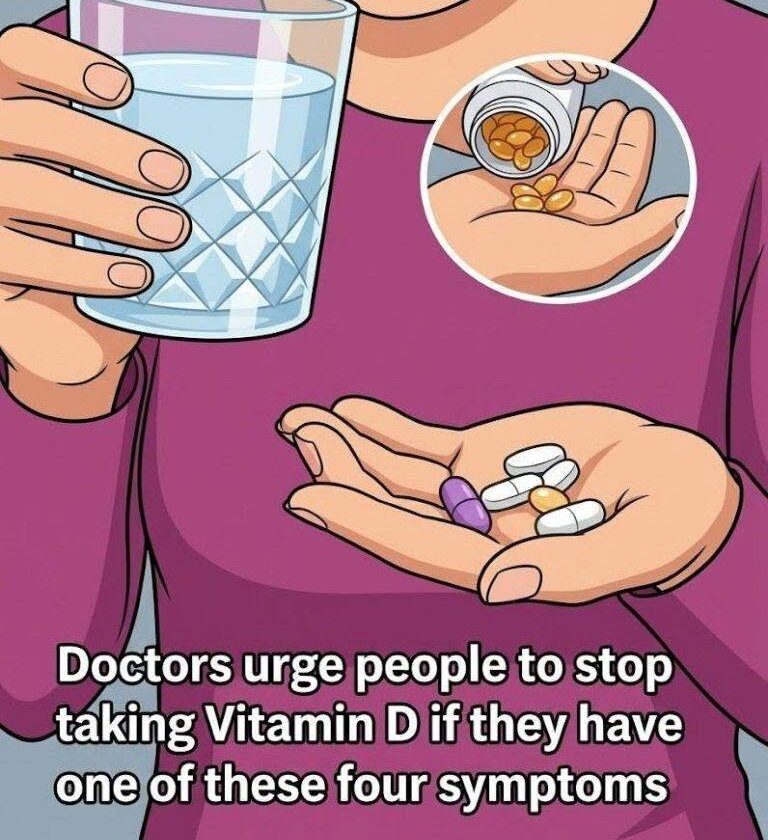
Important Warning: Stop Taking Vitamin D and Seek Medical Advice If You Have These 4 Symptoms
Vitamin D is an important nutrient that helps support bone health, muscle function, and the immune system. Many people take vitamin D supplements when their levels are low or when recommended by a healthcare professional. However, taking very high doses or using supplements unnecessarily can sometimes cause problems.
Too much vitamin D can raise calcium levels in the blood (hypercalcemia), which may lead to unwanted symptoms. If you are taking vitamin D supplements and notice the following signs, stop taking extra doses and discuss them with a healthcare professional.
1. Nausea, Vomiting, or Loss of Appetite
One possible sign of excessive vitamin D intake is digestive discomfort. High vitamin D levels can increase calcium in the blood, which may cause:
- Nausea
- Vomiting
- Reduced appetite
- Stomach discomfort
Persistent symptoms should be checked, especially if you are taking high-dose supplements.
2. Excessive Thirst and Frequent Urination
Too much calcium in the blood can affect how the kidneys handle fluids. Warning signs may include:
- Feeling unusually thirsty
- Drinking much more water than normal
- Urinating frequently
These symptoms can have many causes, so medical evaluation is important rather than assuming vitamin D is the reason.
3. Weakness, Tiredness, or Confusion
Very high vitamin D levels may contribute to symptoms such as:
- Unusual fatigue
- Muscle weakness
- Difficulty concentrating
- Confusion
If these symptoms appear suddenly or are severe, seek medical advice.
4. Kidney-Related Symptoms
Excess calcium can place stress on the kidneys. Possible warning signs include:
- Flank or back discomfort
- Changes in urination
- History of kidney stones
People with kidney problems or certain medical conditions may need extra caution with supplements.
How to Use Vitamin D Safely
- Take vitamin D only in the dose recommended by a healthcare professional or according to reliable guidelines.
- Avoid combining multiple vitamin D products unless advised.
- Consider checking your vitamin D level if you are taking supplements long-term.
- Tell your doctor about all supplements you use.
Vitamin D is beneficial when used appropriately, but more is not always better. If you experience unusual symptoms while taking supplements, it is best to get professional advice rather than continuing or increasing the dose on your own.
Note: Many online posts exaggerate vitamin warnings. Vitamin D toxicity is uncommon and is usually linked to excessive supplement doses over time, not normal amounts from food, sunlight, or standard supplementation.