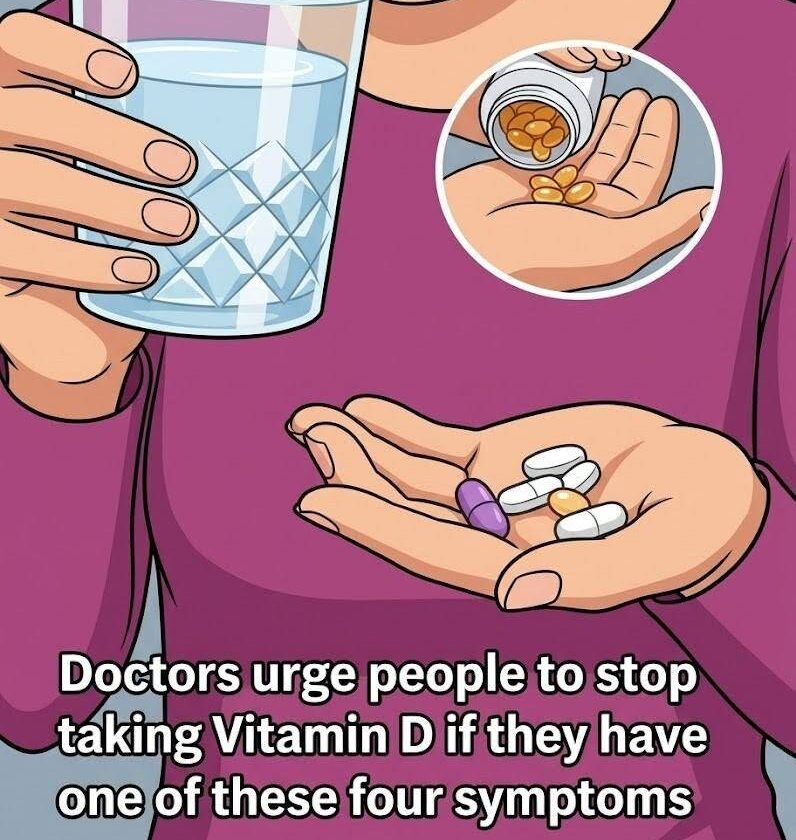
“Stop Taking Vitamin D Immediately If You Have These 4 Symptoms” — What Doctors Actually Want You to Know
This headline is too alarming. Vitamin D is an important nutrient, and prescribed vitamin D should not be stopped automatically because of nonspecific symptoms.
The real concern is vitamin D toxicity, which is usually caused by taking excessive amounts of supplements. Too much vitamin D can raise calcium in the blood (hypercalcemia), potentially damaging the kidneys and other organs.
🚩 Four symptoms that deserve attention
If you’re taking high-dose vitamin D and develop:
- Persistent nausea or vomiting
- Marked weakness or unusual fatigue
- Excessive thirst or frequent/large amounts of urination
- Confusion or significant changes in thinking
these can occur with vitamin-D-related hypercalcemia and warrant medical evaluation.
Other possible warning signs include constipation, poor appetite, dehydration, weight loss, muscle weakness and kidney stones.
How much is too much?
For most adults, the established tolerable upper intake level is 4,000 IU (100 mcg) per day from all sources, although doctors may temporarily prescribe higher doses to treat a documented deficiency. Toxicity generally occurs with substantially excessive intake, rather than ordinary recommended supplementation.