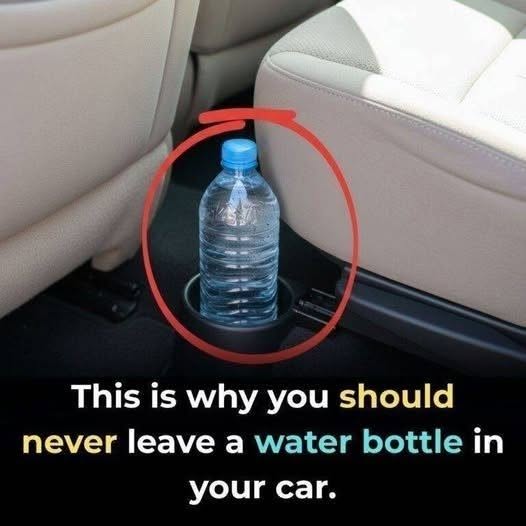
It depends on the type of bottle and how long it’s left there, but the clickbait version usually exaggerates the risks.
What actually happens when you leave a water bottle in a car
Cars heat up quickly, especially in sun:
- Temperatures inside can rise far above outside temperature
- Heat can affect both plastic bottles and the water inside
1) Plastic bottles (especially single-use ones)
If it’s a disposable plastic bottle:
- Heat can cause chemicals to leach in small amounts
- The taste of water may change (slightly “plastic” taste)
- Very old or damaged bottles are riskier
Occasional short exposure is usually not dangerous, but repeated heating is not recommended.
2) Glass or stainless steel bottles
These are much safer:
- No chemical leaching
- Water quality stays stable
- Only concern is temperature (water may become hot)
3) Bacterial growth
- If a bottle is opened and left for a long time in heat, bacteria can grow faster
- Especially if someone drinks from it and leaves it again
4) Fire myth (important clarification)
You may see viral claims that bottles can “start fires in cars.”
- This is very rare and not a typical real-world risk
- It requires very specific sunlight angles and conditions
When it becomes a real concern
- Leaving plastic bottles in hot cars repeatedly
- Storing water in old, scratched plastic bottles
- Drinking from a bottle left in heat for many days
Safer practice
- Use stainless steel or BPA-free bottles
- Don’t leave disposable bottles in hot cars for long periods
- Replace scratched or old plastic bottles
Bottom line
Leaving a water bottle in a car is usually not dangerous in the short term, but heat can affect plastic quality and water taste over time—so it’s better to avoid it, especially with single-use bottles.
If you want, I can explain which plastic bottle types are safest and how to identify them quickly.