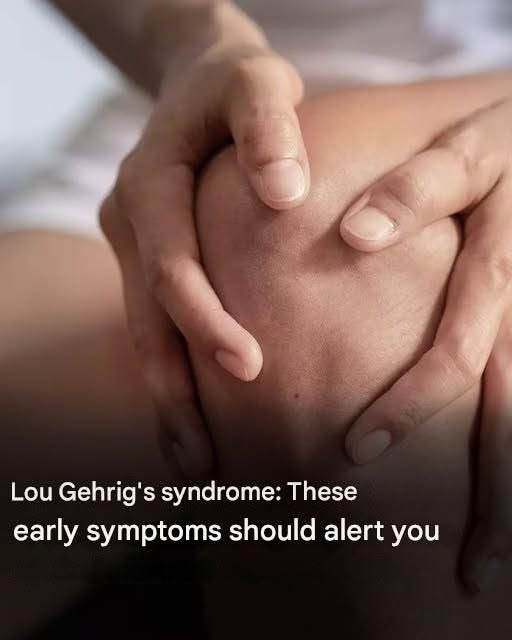
Lou Gehrig’s Disease (ALS): What Are the First Symptoms?
Lou Gehrig’s disease, medically called amyotrophic lateral sclerosis (ALS), is a progressive disease affecting nerve cells that control voluntary muscles. Early symptoms can be subtle and may initially resemble more common problems. (NINDS)
Early symptoms can include
- Muscle weakness — often beginning in one hand, arm, leg, or shoulder.
- Muscle twitching (fasciculations) — especially in the arms, legs, shoulders, or tongue.
- Muscle cramps — recurring cramps can sometimes occur.
- Stiff or tight muscles — muscle stiffness or spasticity may develop.
- Tripping or difficulty walking — weakness in a leg can cause stumbling or an awkward gait.
- Difficulty with everyday hand movements — such as buttoning clothes, writing, or turning a key.
- Slurred or nasal speech — particularly when ALS begins in muscles involved in speaking.
- Difficulty chewing or swallowing — some people have what is called bulbar-onset ALS. (NINDS)
⚠️ Important: these symptoms don’t automatically mean ALS
Muscle twitching, cramps, weakness, or difficulty walking have many possible causes, and ALS requires a medical evaluation rather than being diagnosed from symptoms alone.
If weakness is progressively worsening, particularly if it is accompanied by muscle wasting, persistent twitching, speech changes, or swallowing difficulty, it’s important to see a doctor—often a neurologist—for assessment.
Sudden weakness, facial drooping, speech difficulty, or loss of coordination is different: that can indicate a stroke and requires emergency medical attention.