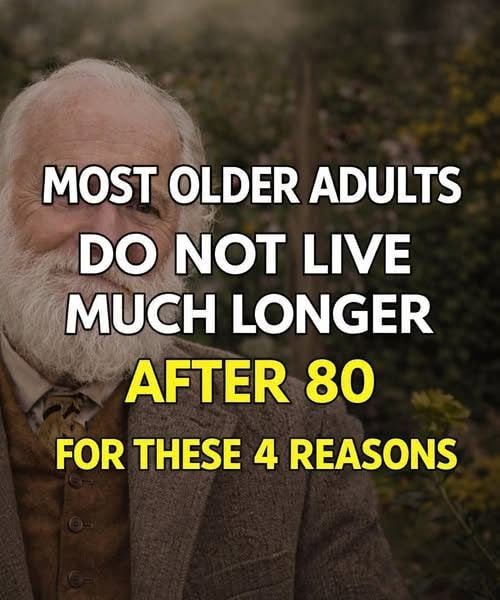
If you’re referring to the headline, the main idea is that 80 isn’t a hard biological cutoff. Many people live well into their 80s and 90s. But after 80, the risk of death rises substantially because several age-related processes accumulate.
Four major reasons are:
Heart and blood-vessel disease: Arteries stiffen and the risk of heart attack, stroke, heart failure, and other cardiovascular problems increases with age.
Cancer: Cells accumulate DNA damage over decades, making cancers more likely as people get older.
Loss of muscle and resilience: Sarcopenia, frailty, poorer balance, and slower recovery mean that an infection, fall, fracture, or surgery can become much more dangerous.
Aging of multiple organs and the immune system: The kidneys, lungs, brain, immune system, and other organs gradually lose reserve. Older bodies are therefore less able to withstand major illnesses.
Importantly, life expectancy and maximum lifespan are very different. Plenty of people live past 80, 90, or even 100. Lifestyle, genetics, medical care, socioeconomic conditions, and simply avoiding major diseases all influence how long an individual lives.