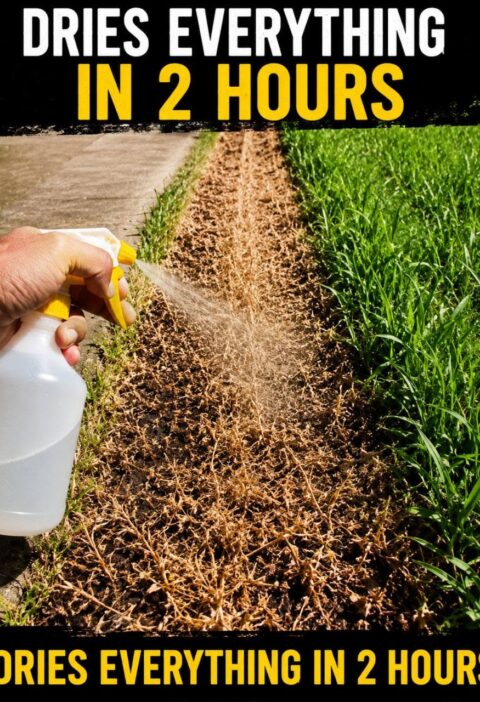
Headlines like “My neighbor laughed when he saw me pouring this on the weeds…” are classic clickbait. They usually tease a common household ingredient as a miracle weed killer.
Some of the substances often recommended—and what to know about them—include:
- Boiling water: Effective for weeds growing in cracks in driveways or sidewalks because it damages plant tissues. It can also kill nearby desirable plants if it reaches them.
- Vinegar: Household vinegar (about 5% acetic acid) may kill the leaves of young weeds but often doesn’t kill the roots of established or perennial weeds, so they frequently grow back. Stronger horticultural vinegar is much more hazardous and can cause serious skin and eye burns.
- Salt: Salt can kill weeds, but it also remains in the soil and can make it difficult for other plants to grow for a long time. It’s generally not recommended for garden beds.
- Dish soap: Soap is sometimes added to vinegar sprays to help the liquid stick to leaves, but on its own it’s not an effective weed killer.
For long-term control, the best method depends on where the weeds are:
- Garden beds: Pull weeds by the roots and apply mulch to suppress new growth.
- Sidewalk cracks or gravel: Boiling water can be a practical non-chemical option.
- Large infestations: Repeated removal or, where appropriate and according to the product label, a suitable herbicide may be more effective.
So if an article claims there’s one secret liquid that permanently eliminates weeds with no downsides, it’s almost certainly overstating the results. Different weeds respond differently, and no household ingredient is a universal, risk-free solution.