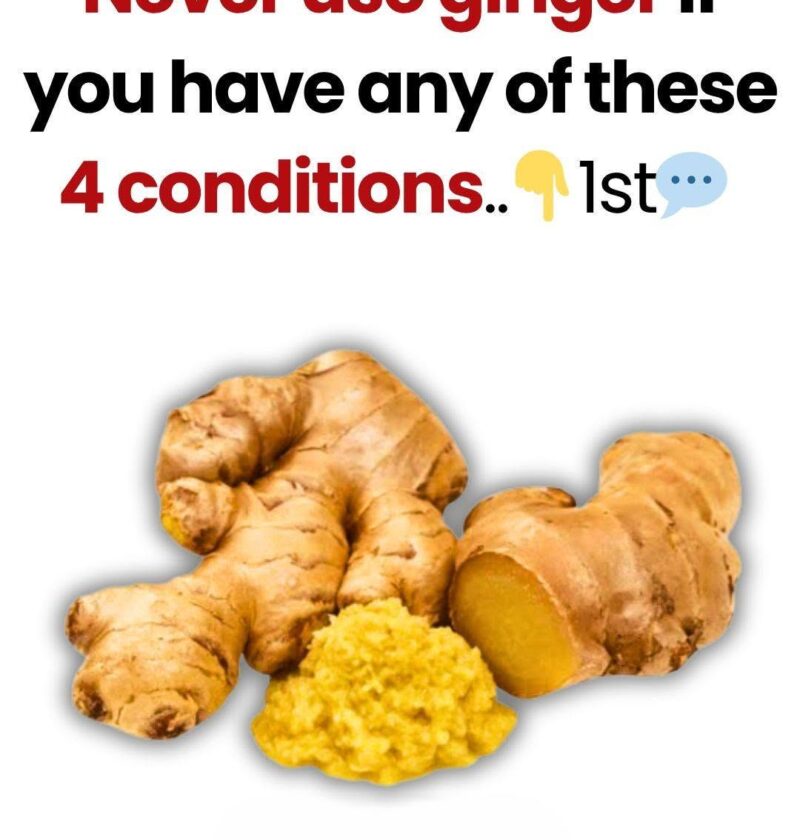
Conditions and situations where caution may be needed
1. Bleeding disorders or use of blood thinners
Ginger may have mild effects on blood clotting.
Examples of medications include:
- Warfarin
- Apixaban
The evidence is mixed, but people with bleeding disorders or those taking anticoagulants should discuss supplements with their healthcare professional.
2. Gallstones
Gallstones
Ginger may stimulate bile flow, so people with gallbladder disease should seek medical advice before using large supplemental doses.
3. Diabetes (if using glucose-lowering medications)
Type 2 Diabetes
Some studies suggest ginger may affect blood sugar levels. This is not usually a problem with culinary use, but concentrated supplements may require monitoring.
4. Low blood pressure or blood pressure medications
Ginger may have mild blood-pressure-lowering effects in some people. Large supplemental doses could potentially add to the effects of medications.
5. Before surgery
Many surgeons recommend discussing herbal supplements before an operation because some may affect bleeding risk or anesthesia management.
What the headline gets wrong
For most healthy people:
- Using ginger in cooking is generally safe.
- Drinking ginger tea is generally safe.
- Ginger does not typically cause “serious health problems” when used normally.
The main concerns involve high-dose supplements, medication interactions, and specific medical conditions.
Seek medical advice if you:
- Take blood thinners
- Have a bleeding disorder
- Have gallbladder disease
- Are preparing for surgery
- Plan to take concentrated ginger supplements regularly
Bottom line
Ginger is not something most people need to avoid. The real issue is that certain medical conditions and medications may require caution with high-dose ginger supplements, not that ginger is dangerous for everyone.