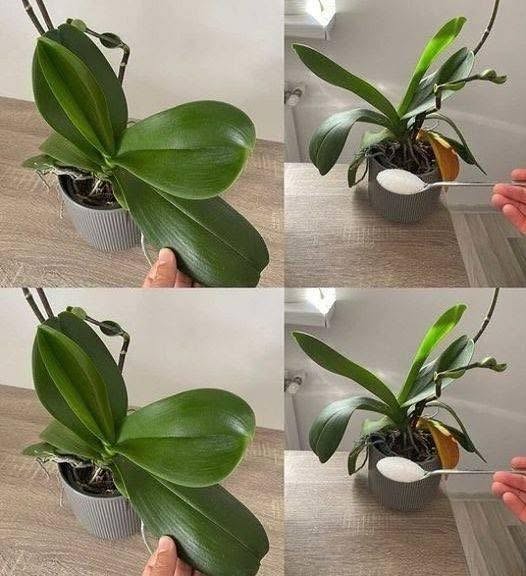
Orchids: “Just 1 Tablespoon and They Will Bloom Non-Stop” — Fact or Myth?
A tablespoon of a mystery household ingredient is not a scientifically proven way to make orchids bloom nonstop. For orchids such as Phalaenopsis, flowering depends much more on light, temperature, watering, healthy roots, and appropriate nutrition.
🌱 What actually helps an orchid rebloom?
1. Give it plenty of bright, indirect light
An east-facing window is often ideal for Phalaenopsis. Too little light can result in poor flowering.
2. Fertilize lightly—not heavily
Orchids don’t need large amounts of fertilizer. The American Orchid Society recommends regular but diluted applications; Phalaenopsis roots can be damaged by excessive fertilizer salts.
3. Use an orchid-specific fertilizer
Rather than relying on a tablespoon of baking soda, sugar, coffee grounds, or another kitchen ingredient, use a fertilizer formulated for orchids and follow its dilution instructions.
4. Give Phalaenopsis cooler nights
Several weeks with nighttime temperatures around 55°F (13°C) can help initiate a new flower spike.
5. Water correctly
Water thoroughly, then allow the growing medium to become nearly dry before watering again. Constantly wet roots can lead to rot.
⚠️ More fertilizer isn’t better
A concentrated “one tablespoon” dose can actually burn orchid roots, depending on what the substance is and how much water it’s mixed with.