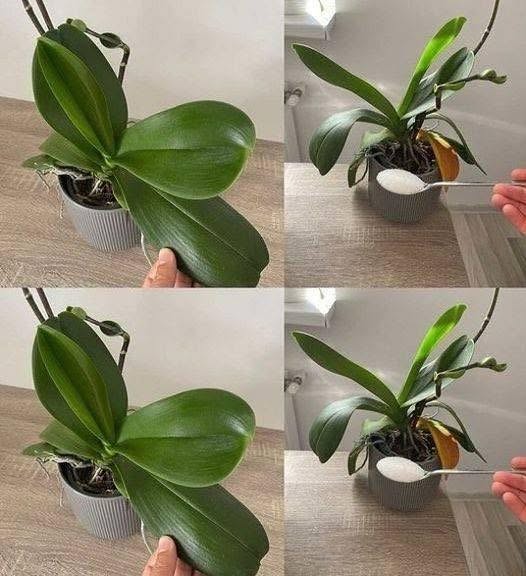
If you’re referring to the viral claim “Just 1 tablespoon and orchids will bloom non-stop,” be cautious. There isn’t a scientifically established one-tablespoon household ingredient that makes orchids bloom continuously.
For orchids such as Phalaenopsis (moth orchids), flowering depends on several factors:
- Light: Insufficient light is one of the most common reasons orchids fail to rebloom. Bright, indirect light is generally best.
- Fertilizer: Orchids benefit from light, regular feeding, but too much fertilizer can damage roots and encourage foliage rather than flowers.
- Temperature: A modest nighttime temperature drop for several weeks can help trigger flowering in many orchids.
- Watering: Water thoroughly, then allow the growing medium to become nearly dry before watering again. Don’t let the roots sit in stagnant water.
🌸 A better “bloom booster”
Use a commercial orchid fertilizer diluted according to its label, rather than guessing with a tablespoon of baking soda, sugar, coffee, rice water, or another kitchen ingredient. Extension specialists generally recommend weak, regular fertilization rather than heavy doses.
And “non-stop blooming” isn’t realistic—even well-cared-for orchids have flowering and resting/growing periods. Some Phalaenopsis can bloom more than once a year, but continuous flowers aren’t guaranteed.