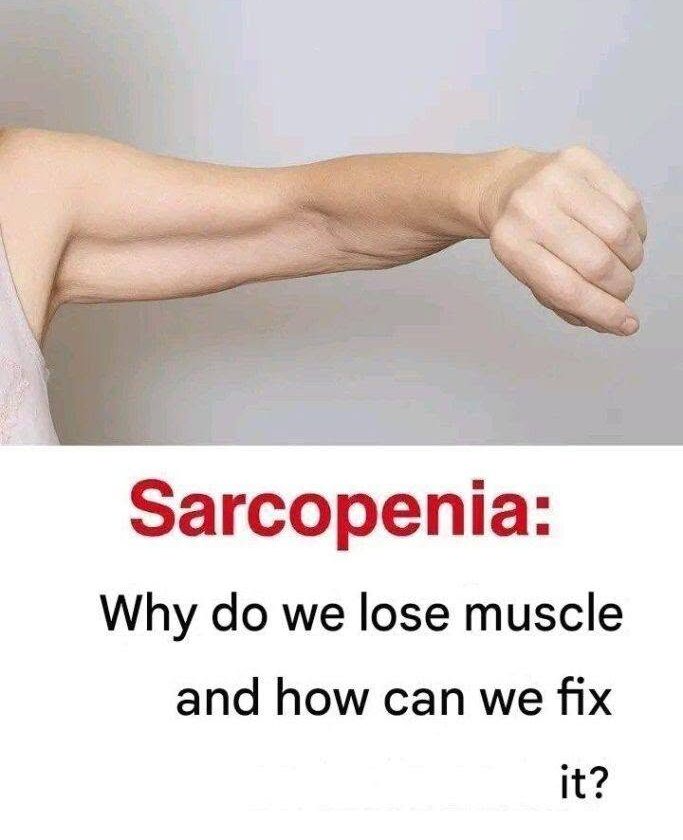
💪 Sarcopenia: Causes of Muscle Loss and What Actually Helps
Sarcopenia is the progressive loss of muscle strength and muscle mass, most commonly associated with aging. It isn’t simply “getting thinner”—loss of muscle can make walking, climbing stairs, getting out of a chair, and everyday activities harder and can increase fall risk. (PubMed)
Why does muscle loss happen?
Several factors can contribute:
- Aging and the gradual decline in muscle-building capacity
- Too little physical activity, especially prolonged sitting or bed rest
- Not eating enough protein or calories
- Unintentional weight loss or malnutrition
- Chronic illnesses such as heart failure, COPD, kidney disease, and cancer
- Periods of hospitalization or inactivity
- Some medications and other medical conditions can also contribute. (PubMed)
🏋️ The most important solution: resistance exercise
The strongest recommendation for treating sarcopenia is progressive resistance training. This can include weights, resistance bands, machines, or appropriately challenging body-weight exercises. (PubMed)
Examples include:
- Sit-to-stand from a sturdy chair
- Wall or counter push-ups
- Resistance-band exercises
- Light weights
- Step-ups
Start at a level you can perform safely and gradually increase the challenge.
🍳 Protein matters too
Adequate protein supports muscle maintenance, particularly when combined with resistance exercise. Guidelines commonly suggest around 1.0–1.2 g of protein per kg of body weight per day for healthy older adults, with higher amounts sometimes appropriate for people who are malnourished or have illness. (PubMed)
Good sources include eggs, fish, chicken, yogurt, milk, beans, lentils, soy, nuts, and seeds.
If you have significant kidney disease, don’t substantially increase protein intake without discussing it with your healthcare professional. (PubMed)
🚶 Don’t forget walking and balance
Walking and other aerobic activity are valuable for overall health, while balance and functional exercises can help reduce fall risk. But walking alone generally isn’t enough to replace resistance training when the goal is rebuilding muscle strength. (National Institute on Aging)
🩺 When should you get checked?
Talk with a healthcare professional if you’re experiencing unexplained muscle loss, increasing weakness, repeated falls, difficulty getting out of a chair, slower walking, or unintentional weight loss. Sarcopenia can be assessed using strength and physical-performance tests and, when appropriate, measurements of muscle mass. (PubMed)
Bottom line: There is no miracle vitamin or supplement that replaces exercise. For most people with age-related muscle loss, the foundation is progressive resistance exercise + adequate protein and calories + addressing any underlying illness or nutritional deficiency. (PubMed)