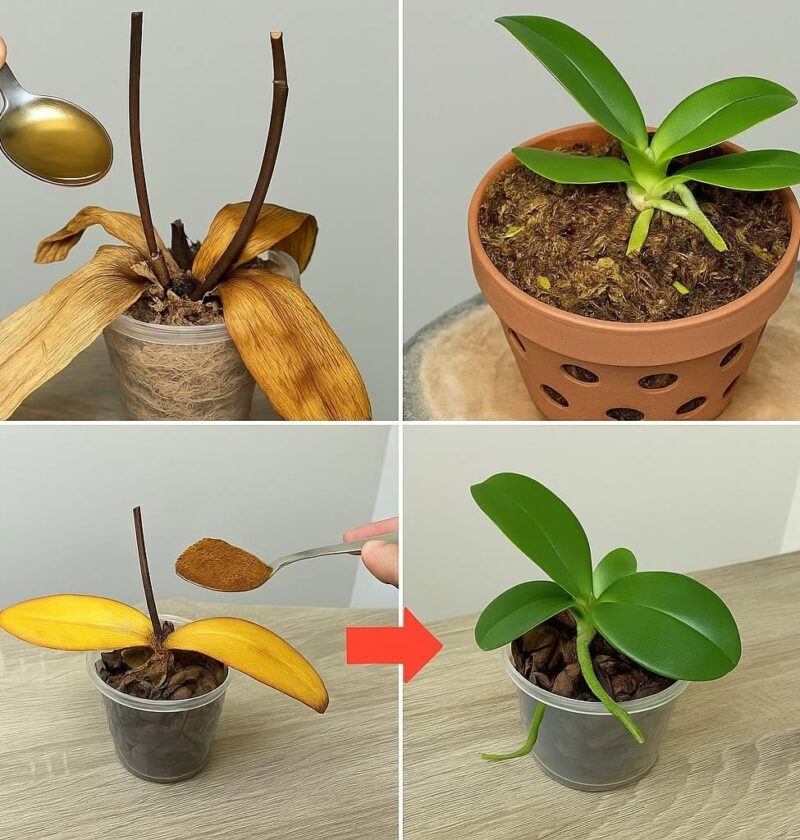
That headline is misleading: there is no single spoonful of household powder that can reliably revive dead orchid roots or make an orchid bloom all year. Completely dead roots cannot be brought back to life; the goal is to encourage new, healthy roots.
Sprinkle 1 Spoon on Orchid Roots? What Actually Helps a Struggling Orchid
If an orchid has damaged roots, start with the basics:
- Remove dead roots. Healthy roots are generally firm; dead or rotting roots are often brown, mushy, or hollow.
- Use a clean, well-draining orchid medium. Phalaenopsis orchids are commonly grown in bark-based mixes that allow plenty of air around the roots.
- Avoid constantly wet roots. Overwatering and poor drainage are major causes of root rot.
- Provide bright, indirect light. Too little light can prevent flowering, while intense direct sun can scorch the leaves.
- Water appropriately. Water thoroughly when the growing medium has largely dried, then allow excess water to drain completely.
- Use orchid fertilizer carefully. A properly diluted, balanced orchid fertilizer can provide nutrients during active growth. More fertilizer isn’t better.
- Don’t bury aerial roots or force them into the pot. They can naturally grow outside the container.
- Be patient. New roots and flower spikes take time; an unhealthy orchid may need weeks or months to recover.
What about cinnamon?
Cinnamon is often recommended online because it has antimicrobial properties, but sprinkling cinnamon over living orchid roots isn’t a proven root-revival treatment and excessive amounts can irritate or dry plant tissue. If used at all, it should not substitute for correcting watering, drainage, or root-rot problems.
Bottom line: Healthy roots, appropriate moisture, good airflow, sufficient light, and patience are much more reliable than a viral “one-spoon” remedy.