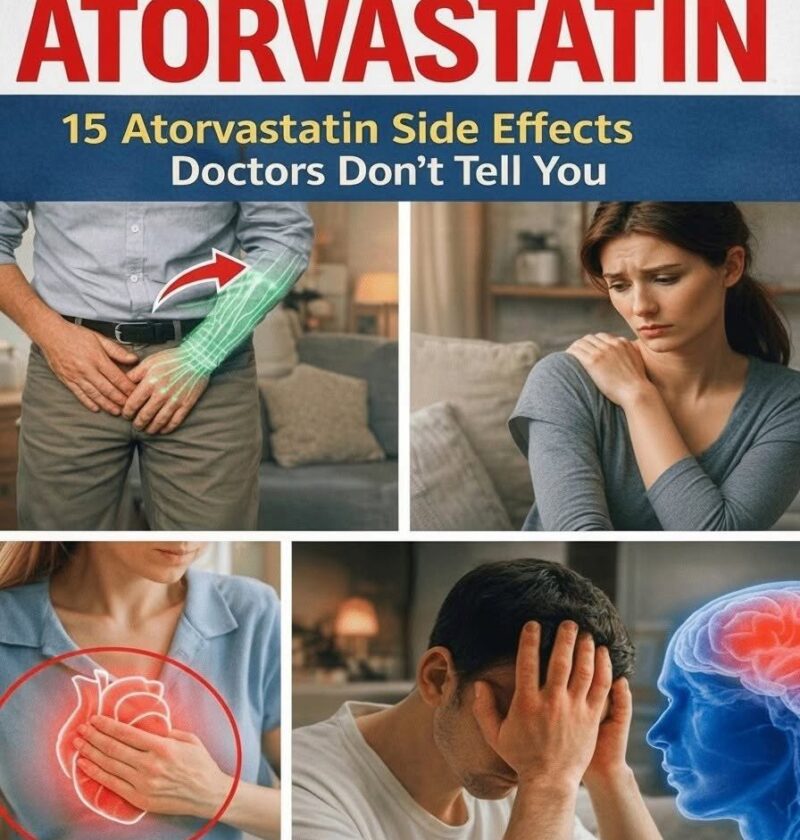
Atorvastatin: 15 Possible Side Effects — What You Actually Need to Know
The headline is more frightening than the evidence warrants. Atorvastatin is widely used to lower cholesterol and reduce the risk of heart attack and stroke. Most people tolerate it well, and you shouldn’t stop it simply because of an online list of side effects.
15 possible effects
Some are relatively common or mild:
- Headache
- Dizziness
- Nausea
- Constipation
- Diarrhea
- Indigestion or stomach discomfort
- Gas
- Muscle aches
- Joint pain
- Sleep problems
- Fatigue or weakness
- Runny or blocked nose
Less common but more important problems include:
- Liver inflammation or injury
- Significant muscle injury (myopathy/rhabdomyolysis)
- Increased blood glucose/HbA1c — statins can modestly increase blood sugar in some people.
🚨 Symptoms that shouldn’t be ignored
Contact a healthcare professional promptly if you develop unexplained severe muscle pain, tenderness or weakness, particularly if accompanied by fever or feeling very unwell. Dark/brown urine can be a warning sign of serious muscle breakdown and needs urgent medical attention.
Also seek prompt medical advice for yellow skin or eyes, severe abdominal pain, or other signs of significant liver problems.
💊 What can increase the risk?
Certain medicines can raise atorvastatin levels and consequently increase muscle toxicity risk. These include some antibiotics, antifungals, antiviral medicines, calcium-channel blockers and immunosuppressants. Grapefruit juice can also increase atorvastatin exposure, so excessive amounts should be avoided.
Age 65+, kidney impairment, uncontrolled hypothyroidism and higher atorvastatin doses are among factors associated with greater muscle-toxicity risk.