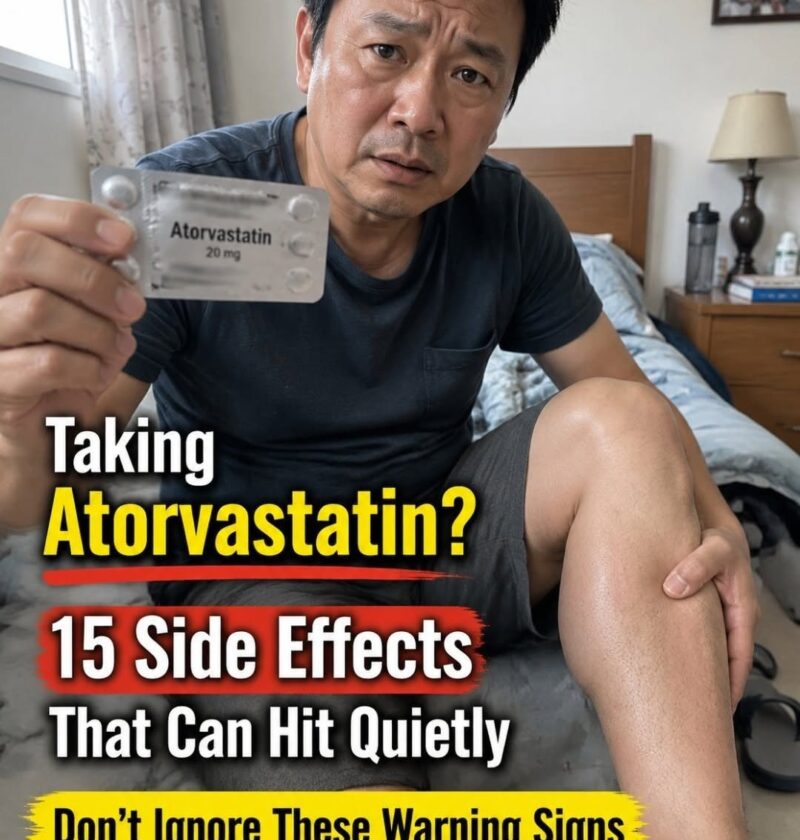
The headline “Taking Atorvastatin? Could These 15 Subtle Side Effects Be Affecting You?” is designed to sound alarming. While atorvastatin can cause side effects, most people take it without major problems, and for those at increased cardiovascular risk, it significantly reduces the chance of heart attack and stroke.
Here are 15 side effects or issues that may occur, along with how common or important they are:
- Muscle aches or soreness
- One of the most commonly reported side effects. If the pain is severe or persistent, let your healthcare professional know.
- Muscle weakness
- Less common than aches. Sudden or marked weakness should be assessed.
- Digestive upset
- Nausea, diarrhoea, constipation, or indigestion can occur, especially when starting treatment.
- Headache
- Usually mild and often improves with time.
- Tiredness
- Some people report fatigue, although many other conditions can also cause it.
- Joint pain
- Occasionally reported, but it has many possible causes besides atorvastatin.
- Sleep disturbances
- Some people notice insomnia or vivid dreams, though evidence that statins commonly cause these is mixed.
- Dizziness
- Can occur, particularly when beginning treatment.
- Mild increases in liver enzymes
- Usually detected on blood tests rather than by symptoms. Serious liver injury is rare.
- Slight increase in blood sugar
- Atorvastatin can modestly increase the risk of developing diabetes in some people, but the cardiovascular benefits generally outweigh this risk.
- Rash or itching
- Uncommon, but possible.
- Memory or concentration concerns
- Some people report these symptoms, but studies have not consistently shown that statins cause long-term cognitive problems.
- Interactions with other medicines
- Certain antibiotics, antifungal medicines, and some heart medicines can increase the risk of side effects.
- Rare serious muscle injury (rhabdomyolysis)
- This is very uncommon but requires urgent medical attention if you develop severe muscle pain, profound weakness, or dark urine.
- Allergic reactions
- Rare, but swelling of the face or throat, difficulty breathing, or widespread hives require emergency medical care.
Don’t stop atorvastatin on your own
If you think you’re experiencing side effects, don’t stop taking atorvastatin without discussing it with your healthcare professional. They may:
- Confirm whether the symptoms are likely to be related.
- Adjust the dose.
- Switch to a different statin or another cholesterol-lowering medicine if appropriate.
When to seek prompt medical advice
Contact a healthcare professional promptly if you develop:
- Severe or unexplained muscle pain or weakness.
- Dark-coloured urine.
- Yellowing of the skin or eyes.
- Severe abdominal pain.
- A rash with swelling or difficulty breathing.
Bottom line: Atorvastatin can cause side effects, but serious ones are uncommon. For many people, the reduction in heart attack and stroke risk outweighs the potential downsides. If you have symptoms that concern you, a medication review is a better approach than stopping treatment based on an online headline.