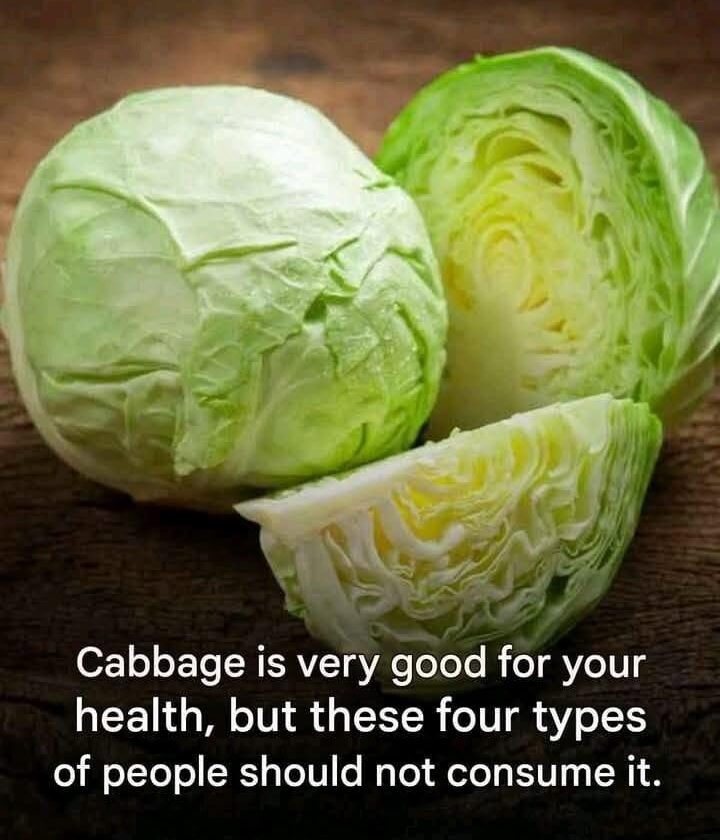
🥬 “The 4 Types of People Who Shouldn’t Eat Cabbage” — Is That True?
Cabbage is a nutritious vegetable and most people can eat it safely. There isn’t a medically recognized list of four groups who must completely avoid cabbage.
However, some people may need to limit it or take extra care:
1. 💊 People taking warfarin
Cabbage contains vitamin K, which affects blood clotting. If you’re taking warfarin, you generally don’t need to eliminate cabbage, but you should keep your vitamin-K intake reasonably consistent from day to day. Suddenly eating much more or much less can affect how warfarin works.
2. 🤰 People with certain digestive sensitivities
Cabbage is a cruciferous vegetable and can cause gas, bloating or abdominal discomfort in some people, particularly when eaten in large quantities. If it consistently triggers symptoms, smaller portions or cooked cabbage may be easier to tolerate.
3. 🩺 People with certain gastrointestinal conditions
If you have a digestive disorder that makes high-fiber foods difficult to tolerate, your clinician may recommend temporarily modifying your diet. This is individual, rather than meaning cabbage is universally harmful.
4. 💊 People who have been told to follow a specific medical diet
People with certain medical conditions or medication regimens may have individualized dietary restrictions. In these situations, the question isn’t simply whether cabbage is “bad,” but how much and how often you can safely eat it.
🥗 What about the thyroid?
You may have heard that cabbage is dangerous for people with hypothyroidism. Cruciferous vegetables contain compounds called goitrogens, but normal amounts of cooked cabbage are generally not something healthy people need to avoid. Extremely high consumption, particularly alongside iodine deficiency, is a different situation