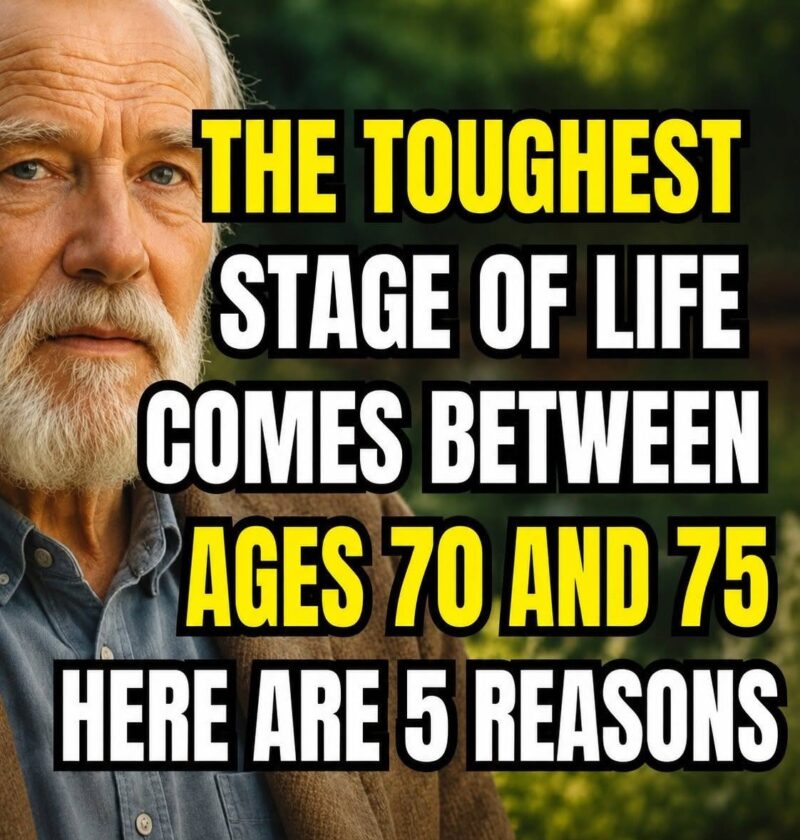
The statement that “the hardest time of life is between 70 and 75 years old” is not a universal fact—many people experience their most difficult periods at different ages. However, for some people, the early 70s can bring a unique combination of life changes. Here are 5 common reasons why this period may feel challenging:
1. Adjusting to a new sense of identity
After retirement or leaving a long-term career, some people struggle with the question: “What is my purpose now?” A job often provides structure, social connections, and a sense of contribution. Rebuilding identity outside of work can take time.
2. Loss of friends and loved ones
By the 70s, many people begin experiencing more frequent losses—friends, siblings, or a spouse. Grief can create loneliness and force major adjustments to daily life.
3. Changes in health and independence
Even active older adults may notice changes in energy, mobility, hearing, vision, or chronic health conditions. The challenge is often not just the condition itself, but adapting to new limits while maintaining independence.
4. Financial and lifestyle adjustments
Retirement can bring concerns about savings, medical expenses, housing, and maintaining a comfortable lifestyle. Managing finances with a fixed income can become a source of stress.
5. Facing questions about aging and the future
The early 70s can bring deeper reflections about time, legacy, family relationships, and unfinished goals. Some people experience anxiety about losing independence or becoming a burden on others.
That said, the 70s can also be a rewarding stage of life. Many people report greater emotional stability, stronger relationships, more freedom, and a deeper appreciation for everyday experiences. Staying socially connected, physically active, mentally engaged, and purposeful can make a significant difference.
Age alone does not determine quality of life—the way a person adapts, stays connected, and finds meaning often matters much more.