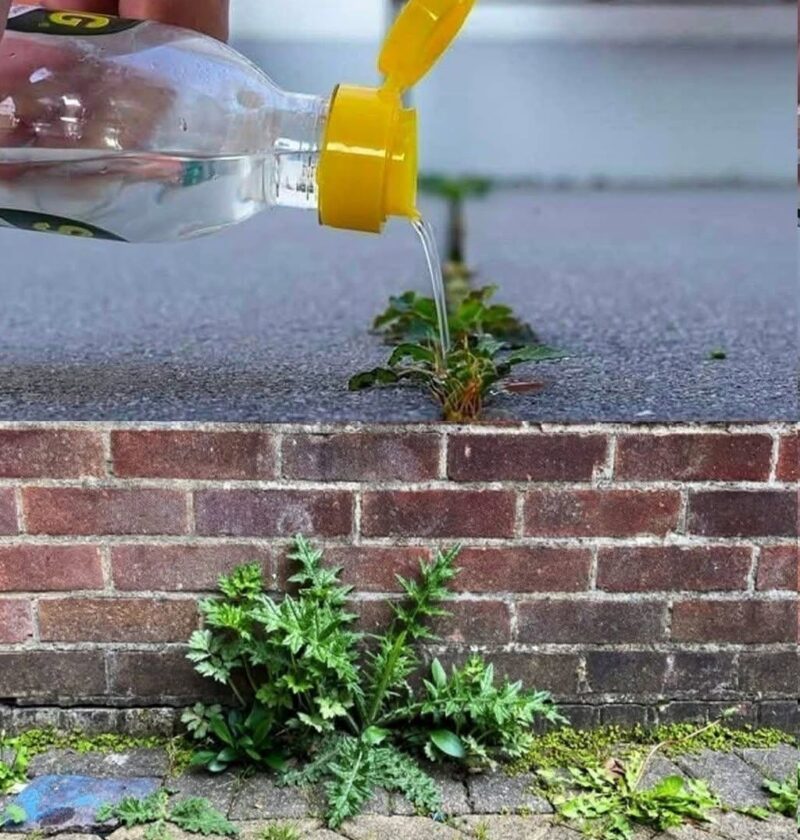
The idea of a “natural solution that removes all weeds without chemicals” is a bit misleading. Weeds are just plants growing where you don’t want them, and no single natural method permanently eliminates them—but you can control them effectively without synthetic herbicides.
Here are the most reliable non-chemical methods:
1. Manual removal (most effective long-term)
- Pull weeds out by the roots
- Best after rain or watering when soil is soft
- Works especially well for deep-rooted weeds like dandelions
Dandelion is a common example—if you leave the root behind, it grows back.
2. Mulching (prevention method)
- Cover soil with straw, wood chips, or dry leaves
- Blocks sunlight so weed seeds can’t germinate
- Also keeps soil moist and improves soil quality over time
3. Boiling water (natural heat control)
- Pour carefully on weeds in cracks (driveways, paths)
- Kills plant tissue instantly
- Works best on small or young weeds
4. Vinegar spray (spot treatment)
- Household vinegar can burn leaves of small weeds
- Works only on the top part of the plant, not deep roots
- Can also harm nearby plants, so use carefully
5. Smothering (solarization or covering)
- Cover area with cardboard, plastic, or thick mulch
- Cuts off light and oxygen
- Effective for larger infested patches over time
Important reality check
- “Natural” does not mean harmless—vinegar or boiling water can also damage desired plants
- Weeds often return unless soil is managed consistently
- The best strategy is combination: remove + prevent regrowth
Bottom line
There is no instant “magic natural weed killer.” The most effective chemical-free approach is manual removal + prevention (mulch + soil coverage).
If you want, tell me what type of weeds you have or show a photo—I can suggest a targeted method that actually works for that specific plant.