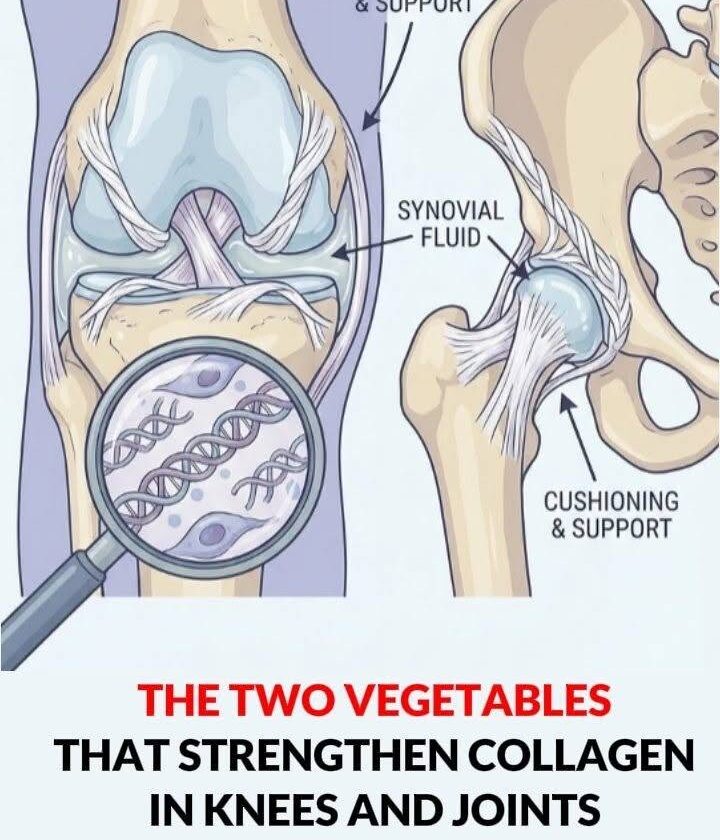
If you’re fact-checking “These TWO vegetables can rebuild collagen in your knees and joints — most people have no idea!”, the headline is misleading.
There are vegetables that provide nutrients involved in collagen production and joint health, but no two vegetables have been shown to rebuild damaged knee cartilage or restore collagen in arthritic joints.
Two particularly good choices are:
Bell peppers — especially rich in vitamin C. Vitamin C is required for normal collagen formation, and peppers can help you meet your vitamin C needs.
A
Arthritis Foundation
+1
Broccoli and other cruciferous vegetables — provide vitamin C, vitamin K and antioxidant compounds. Sulforaphane has shown potentially beneficial effects on cartilage in laboratory and animal research, but this doesn’t establish that eating broccoli rebuilds human knee cartilage.
A
Arthritis Foundation
+1
The important distinction
Your body makes collagen from amino acids and requires vitamin C and other nutrients for the process. Eating vitamin-C-rich vegetables supports normal collagen production, but that is very different from directly replacing worn-out cartilage. Human evidence that vitamin C supplementation actually reverses joint damage remains limited.
P
PubMed Central (PMC)
+1
There is some evidence that oral collagen supplements may improve pain and function in people with knee osteoarthritis, but that’s a different claim from saying vegetables “rebuild” cartilage.
P
PubMed
Bottom line: Eat plenty of vegetables—including peppers, broccoli, leafy greens and other colorful produce—for overall nutrition and joint health, but don’t expect any vegetable to regrow damaged knee cartilage. For osteoarthritis, maintaining a healthy weight, regular appropriate exercise, and evidence-based treatment have much stronger practical importance.
A
Arthritis Foundation
+1
A
P
P
Sources